Mader Stein, Basalt hill in North Hesse, Germany
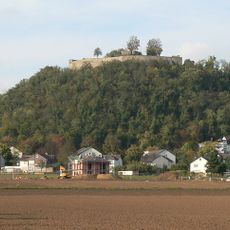
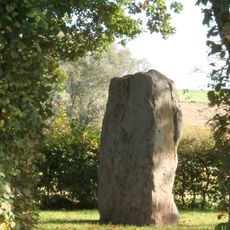
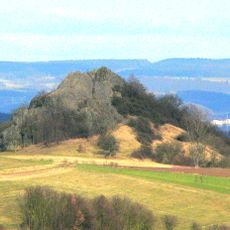
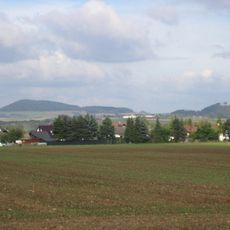
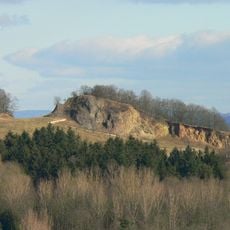
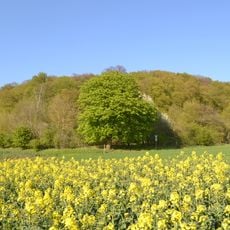
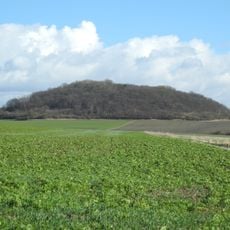
Mader Stein is a 265 m high basalt hillock in the Schwalm-Eder-Kreis, North Hesse, north-east of Maden, a part of Gudensberg. It is the eroded neck of a Miocene volcano; the remaining basalt columns lie sub-horizontal, as at Scharfenstein, and a basalt slab stands on the north-east slope. The summit is bare rock, not a rounded kuppe, and the hill is a protected natural monument within the 311 ha FFH area Gudensberger Basaltkuppen und Wald am Falkenstein.
The peak is an extinct volcano that formed millions of years ago during the Miocene period, shaping the geological character of this region. This ancient volcanic activity left behind the distinctive columnar basalt structures visible today.
On Ascension Day the hill was formerly climbed to dance, sing and gather healing herbs. During Advent a lit Christmas tree stands on the summit plateau. A local legend links the hill to the Devil, who is said to have thrown a stone at Saint Boniface's church in Fritzlar; the stone landed near Maden and is called Wotanstein.
The hike up is straightforward and follows marked paths through a protected nature reserve with good access. Wear sturdy shoes and stay on established trails to reach the summit safely.
The basalt columns on Mader Stein lie sub-horizontal, as on the Scharfenstein, and the summit is not a rounded kuppe but a rocky hillock. The rare burning bush (Dictamnus) grows here, though it is very rare elsewhere in Germany; the town of Gudensberg regularly sends people to cut back encroaching blackthorn.
The community of curious travelers
AroundUs brings together thousands of curated places, local tips, and hidden gems, enriched daily by 94,383 contributors worldwide.