Wolbecker Tiergarten, Protected woodland in Münster, Germany
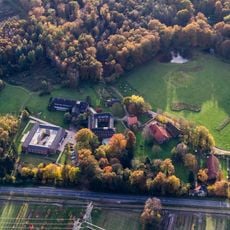
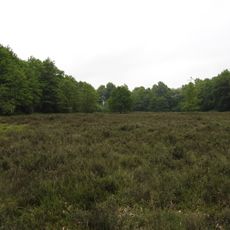
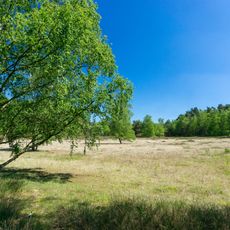
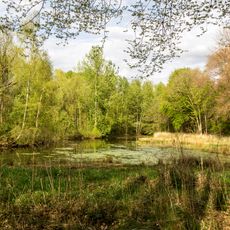
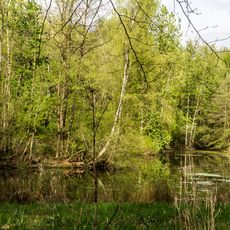
Wolbecker Tiergarten is a protected nature reserve consisting of extensive forested land divided into two distinct sections by a river running through it. The area is crisscrossed by a network of walking paths that allow visitors to explore different parts of the forest.
The forest was probably first laid out in the 12th century as a wooded mark, making it one of the oldest forests in the Münsterland. Its present form and name date to around 1740, when Prince-Bishop Clemens August I of Bavaria had the broad grid of paths and the earthen walls at the woodland edges built. In 1803 secularisation brought it into Prussian hands, and General Gebhard Leberecht von Blücher's troops shot the last game; the forest has been used for timber since.
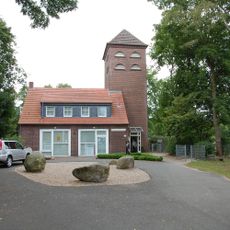
The name Tiergarten refers to the enclosed hunting park established by Prince-Bishop Clemens August I of Bavaria around 1740, who laid out the grid of broad paths and earthen walls. Near the old forester's house, built in 1712, a boundary stone from that period still stands. In the 1920s a coffeehouse operated at Hof Markfort until 1943; its old signs remain.
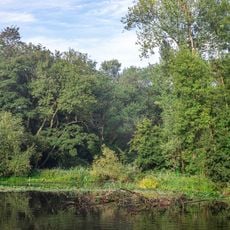
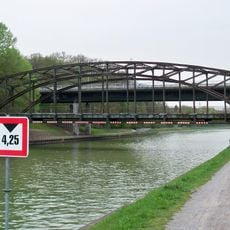
Only the road named Tiergarten is paved, continuing later with a gravel surface; all other routes are typical forest tracks laid out in a grid. Three bridges cross the Angel, which divides the reserve into a smaller northern part, the Kellingholz, and a larger southern part. The old arm set aside as a biotope is used as an ice-skating rink in winter.
The forest is home to a population of fire salamanders that remains isolated from neighboring groups, maintaining its own genetic characteristics. This separation makes the reserve valuable for biodiversity research and conservation efforts.
The community of curious travelers
AroundUs brings together thousands of curated places, local tips, and hidden gems, enriched daily by 92,802 contributors worldwide.