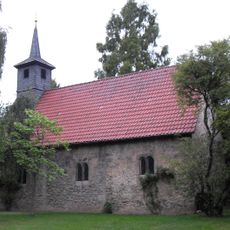
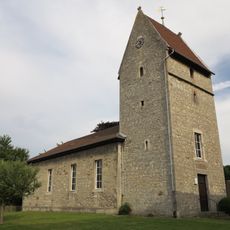
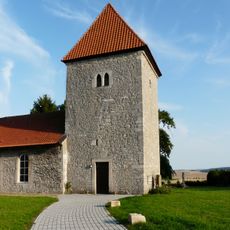
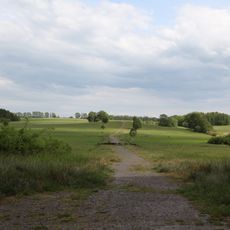
Erkeroder Trochitenkalk, Limestone quarry in Erkerode, Germany
The Erkeroder Trochitenkalk is a light yellow porous limestone composed entirely of fossilized sea lily remains, primarily stem segments. The deposit contains up to 99 percent calcium carbonate and has been quarried extensively for cement production and industrial applications.
The limestone deposits formed during the Upper Muschelkalk period roughly 210 million years ago when sea lilies thrived in the Germanic Basin. This ancient marine environment allowed countless organisms to accumulate on the seafloor, eventually creating the rich fossil layer we see today.
Until the 1700s, pharmacies in the region sold the fossilized stem segments as remedies that patients would consume whole or ground into powder. The distinctive circular patterns of these fossils later influenced decorative designs found in local timber-framed houses.
The quarry is open to visitors who can clearly see the fossils embedded in the rock layers. Best to visit during dry weather, as wet conditions can make the site difficult to navigate and the exposed stone surfaces slippery.
The stone is almost entirely made up of tiny circular fossils that resemble small beads, creating a granular texture throughout. This unusual composition makes it a textbook example of marine fossil deposits found anywhere in Europe.
The community of curious travelers
AroundUs brings together thousands of curated places, local tips, and hidden gems, enriched daily by 92,112 contributors worldwide.