Erbgroßherzogliches Palais, Neo-baroque palace in Karlsruhe, Germany
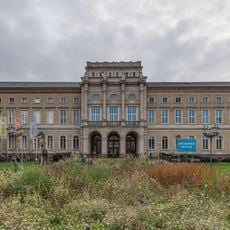
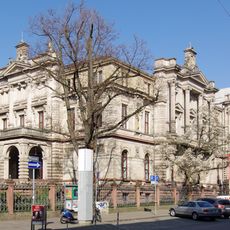
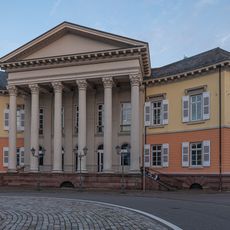
The Erbgroßherzogliches Palais is a neo-Baroque palace in Karlsruhe with two full storeys and a mansard roof. Its northeast garden facade has a projecting bay with four composite columns, a round-arched portal and a broken pediment, while the southwest bay toward Kriegsstraße carries a balcony held by two atlantes. A copper dome with a Baden crown rises above the central tambour.
Built between 1891 and 1897 for Crown Prince Friedrich II of Baden and his wife Hilda of Nassau, the palace was designed by architect Josef Durm. The project represented a shift toward modernizing the city's architectural character at the turn of the century.
A marble memorial inside honors 34 judges and lawyers who died in Soviet captivity during World War II, shaping the somber character of the space. This reminder reflects the building's role as a place where German justice was carried out and remembered.
The palace has housed the Federal Court of Justice since October 1950, and the federal prosecutor's office was also based here until it moved to Brauerstraße. The roughly four-hectare park is not open to the public, a restriction tightened after 2001. The building itself is an active court, so visitors can view it only from the street.
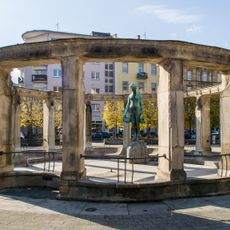
The garden's south side once had a cascade of six steps descending from a terrace into a round fountain basin, designed by Josef Durm. It was removed in 1970 when Kriegsstraße and Karlstor were widened for traffic; only the terrace, renovated in 2006, survives. The Galatea fountain by Karl Friedrich Moest was placed here in 1954.
The community of curious travelers
AroundUs brings together thousands of curated places, local tips, and hidden gems, enriched daily by 92,853 contributors worldwide.