Prinx-Max-Palais, Cultural center and historical villa in Karlsruhe, Germany
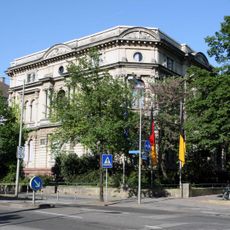
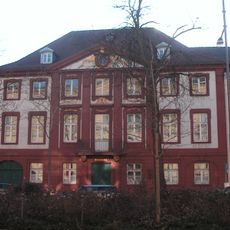
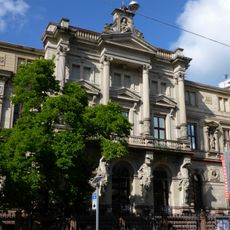
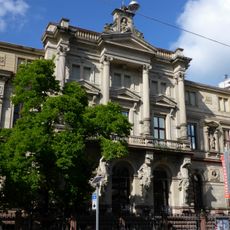
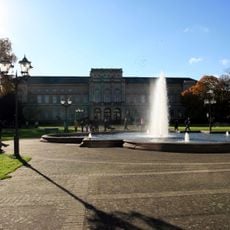
The Prinz-Max-Palais is a villa built from 1881 to 1884 to designs by Josef Durm in the Neo-Renaissance style. Its south and east facades have three-bay central projections with pediments and mezzanine floors rising from a rusticated base. A full third floor replaced the original mansard roof after World War II damage.
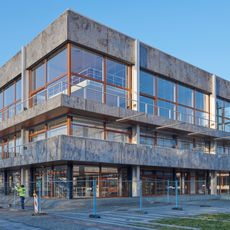
The palace was built between 1881 and 1884 for banker August Schmieder and later became the residence of Prince Max of Baden. After World War Two it served as the seat of Germany's Federal Constitutional Court from 1951 to 1969 before transforming into a cultural center.
The building now serves multiple cultural institutions that cater to different interests: the City Museum, Museum of Literature on the Upper Rhine, and a youth library. These institutions shape the interior life of the palace and make it a living space for art lovers and history enthusiasts.
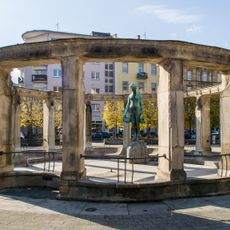
The palace stands at Karlsruhe's southwestern edge of the Innenstadt, near the coordinates 49.0111, 8.3950. The garden's southeastern corner holds the bronze Greif of the Leibgrenadierdenkmal, moved there on 27 March 2014 after the monument was dismantled in 2010 for the Stadtbahntunnel. The building is a Kulturdenkmal von besonderer Bedeutung.
At the southeast corner of the garden stands the bronze griffin of the Leibgrenadierdenkmal, a regimental monument. It was dismantled in 2010 during construction of the Stadtbahn tunnel, part of the Kombilösung project, and re-erected here on 27 March 2014.
The community of curious travelers
AroundUs brings together thousands of curated places, local tips, and hidden gems, enriched daily by 93,783 contributors worldwide.