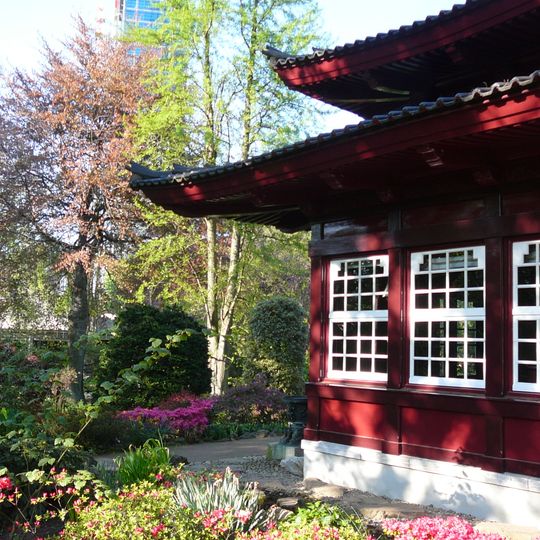
Japanischer Garten Leverkusen, Japanese garden in Leverkusen, Germany
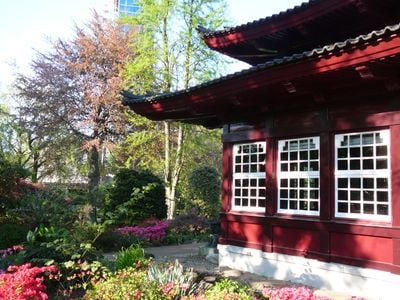
The Japanischer Garten Leverkusen is a garden park with traditional Japanese elements including ponds, small streams, waterfalls, and carefully arranged stones throughout the space. The grounds feature Asian plant species and multiple pathways that allow visitors to explore the composition from different vantage points.
The garden was first laid out in 1912 beside Carl Duisberg's villa; after a 1926 world trip that included Japan, the Bayer chairman had it expanded. In 1960 it was moved about 250 metres south and completed in 1961 on a 15,000 m² site in Cologne-Flittard, with many new trees planted. It has been open to the public during the day since the 1950s.
The garden follows Japanese design principles visible in how stones, water, and plants are arranged throughout the space. The teahouse and red bridge create spots where visitors naturally pause to observe their surroundings and take in the landscape.
Entry is free and the garden is open daily, with extended hours during warmer months. Visiting during daylight is best to fully see the pathways, water features, and plantings throughout the space.
The garden's Mikado Bridge is modelled on a bridge in Nikkō, the Japanese temple town. Bronze statues of Buddhas, geishas and water-spouting dragons stood in the park until they were removed in 2013 because of metal thefts; in June 2025 Bayer had the remaining bronzes auctioned at Nagel in Stuttgart.
The community of curious travelers
AroundUs brings together thousands of curated places, local tips, and hidden gems, enriched daily by 92,995 contributors worldwide.