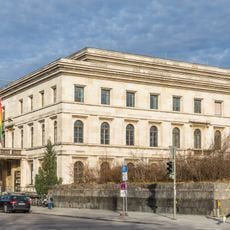
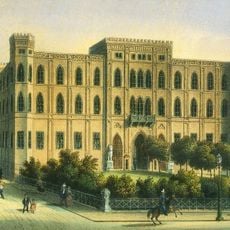
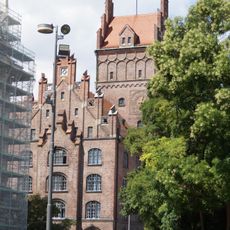
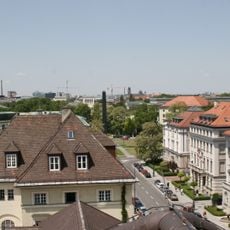
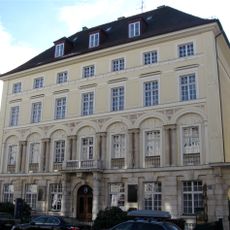
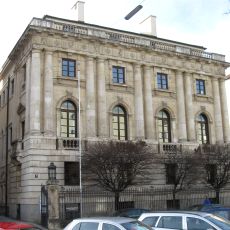
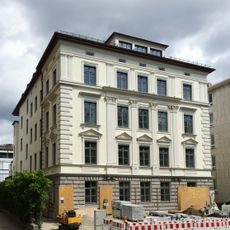
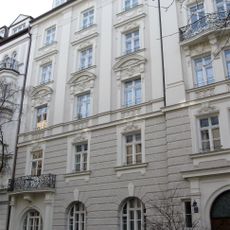
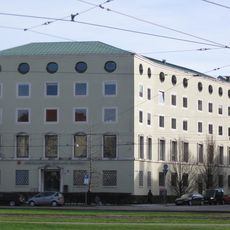
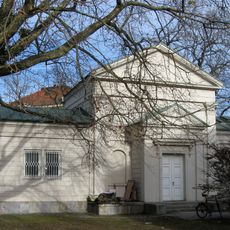
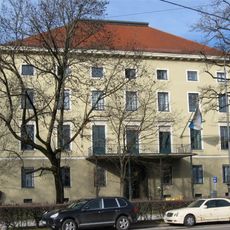
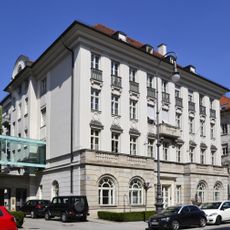
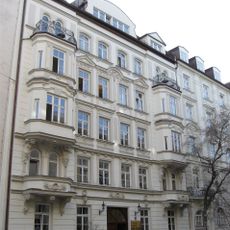
Prinz-Georg-Palais, City palace in Munich, Germany.
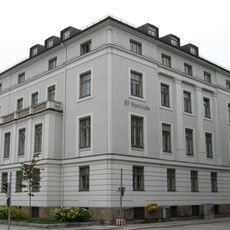
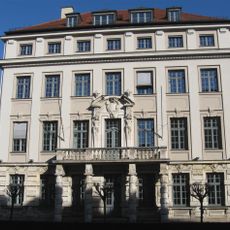
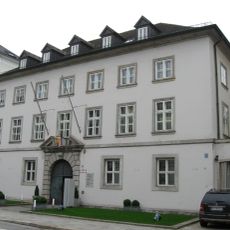
Prinz-Georg-Palais is a city palace in Munich that unites classical and Renaissance elements in its exterior walls. The building shapes its surroundings with its symmetrical arrangement, tall columns, and elaborately designed details.
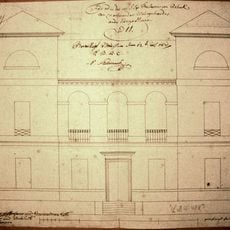
Franz Wilhelm von Asbeck had the palais built on Karolinenplatz 5 to plans by Karl von Fischer, with a 4x4 grid and a central rotunda inspired by Palladio's La Rotonda. In 1825 Leo von Klenze assessed the planned alterations: the main building was raised by one storey and extended with side wings. From 1881 to 1894 it housed the Russian legation, and in 1896 the Deiglmayr company added two floors before selling it to Georg von Bayern.
The palace takes its name from a royal family member and reflects through its design the refined living standards of Munich's upper classes. The facade tells through its forms and details about the taste culture of its era.
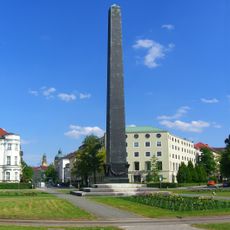
The palais stands free on the south side of Karolinenplatz, set back from the street, so the facade and its Ionic portal porch can be seen from the open square. The square is a traffic hub with several tram and bus lines; the building itself is not open to the public as a museum, so visits are limited to the exterior.
The collaboration between the two architects emerged from a time when Munich redefined itself as a European cultural center. This palace shows the era's intention to merge internationally recognized building forms with local traditions.
The community of curious travelers
AroundUs brings together thousands of curated places, local tips, and hidden gems, enriched daily by 94,258 contributors worldwide.