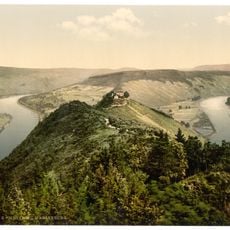
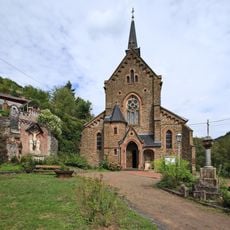
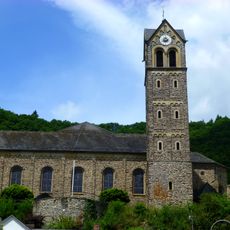
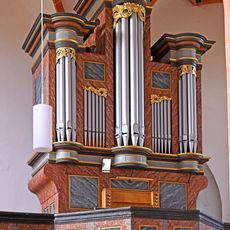
Entersburg, Castle ruin in Hontheim, Germany.
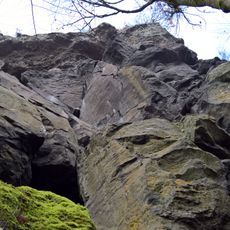
Entersburg is a castle ruin in Hontheim with stone foundations and partially preserved walls still visible today. The remains show the typical layout of a medieval fortification built with solid stone construction.
Dendrochronological dating places the castle's construction before 1096, built by the lords of Nantersburg, whom historian Beyer calls imperial ministerials. In 1136, while Archbishop Albero of Montreuil accompanied Emperor Lothar III to Italy, brothers Werner and Johann of Nantersburg seized the nearby archiepiscopal castle of Arras at the urging of Count Palatine Otto I of Salm. After Albero's return the brothers were driven out and the Nantersburg was destroyed in 1138; whether it was rebuilt is unknown. It reappears as "Entersburg" in a 1335 purchase deed between Elector Balduin of Trier and knight Cuno von Ulmen.
The name Nantersburg comes from the lords of Nantersburg, a family of imperial ministerials. In 1136, brothers Werner and Johann occupied the nearby archiepiscopal castle of Arras at the urging of Count Palatine Otto I of Salm; after Archbishop Albero of Montreuil returned from Italy, he expelled them and had their castle destroyed in 1138. The site is still called Entersburg in a 1335 deed.
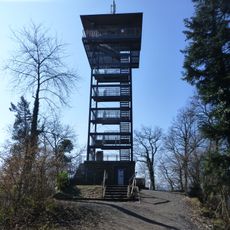
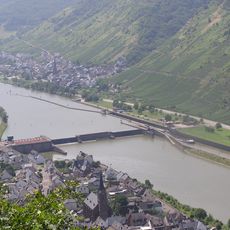
The site is accessible via hiking trails and located in hilly landscape with views over the valley. No special preparations are needed, but sturdy shoes are recommended since the ground is uneven.
Two bronze figures were found at the site: a winged Cupid and a bust of Minerva. The Roman fortification was abandoned in the mid-4th century, as shown by coin finds. The medieval castle had no keep; its main defence was the long ridge, cut off on the only accessible side by a deep ditch.
The community of curious travelers
AroundUs brings together thousands of curated places, local tips, and hidden gems, enriched daily by 94,638 contributors worldwide.