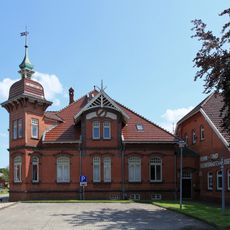
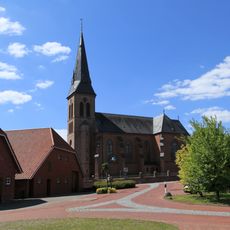
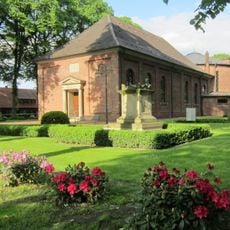
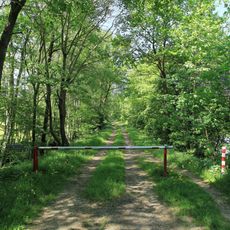
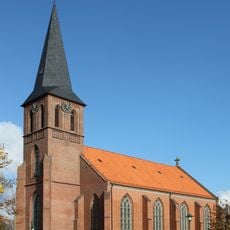
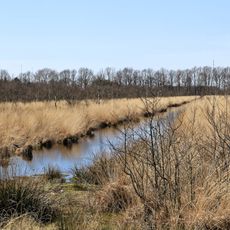
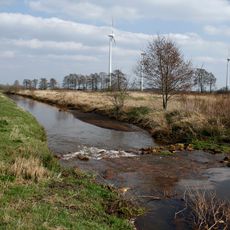
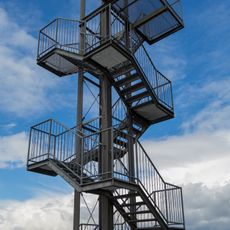
Esterweger Dose, Protected area in Lower Saxony, Germany.
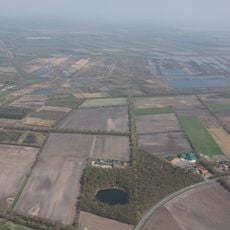
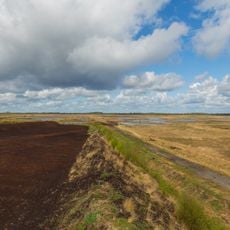
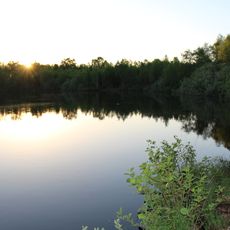
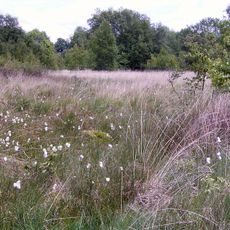
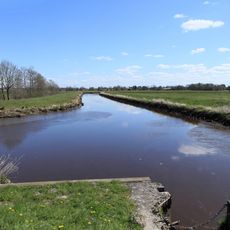
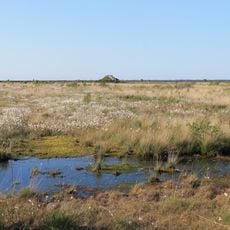
Esterweger Dose is a protected area in Lower Saxony covering about 64 square kilometers of moorland, drainage systems, and open grasslands. The reserve stretches across several municipalities and contains a mix of wet and dry habitats that support different species.
Nature conservation efforts began around 1927, when two 100-hectare hydrological test fields were laid out, one drained and one untouched. A 100-hectare reserve was designated on 19 June 1937, but it was abolished on 29 January 1959 after peat extraction was approved across the whole bog. The present 4,747-hectare reserve has been protected since 22 December 2005.
The name Dose comes from North Low Saxon and denotes a treeless high moor that regularly stands under water and is enclosed by higher sand ridges. The moor was once linked with the moors of Saterland and Ostrhauderfehn. From 1933, prisoners of the Esterwegen camp, known as Moorsoldaten, were forced to drain parts of the Dose.
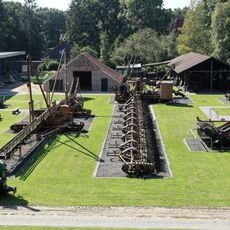
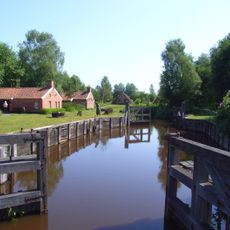
The reserve lies south of Ostrhauderfehn and reaches the Bundesstraße 401 along the Küstenkanal; the Melmmoor/Kuhdammoor reserve adjoins it south of the canal. It drains east via ditches to the Sagter Ems and west to the Esterweger Beeke and Burlage-Langholter Tief. Commercial peat cutting is still permitted on large parts until 2029, so expect working surfaces alongside the protected moor.
The Esterweger Dose was the last breeding site of the Golden Plover in Central Europe until around 2015; despite a rescue programme, the bird could not be kept. Today the reserve still holds the large white-faced darter dragonfly, the ruff, curlew and black-tailed godwit, and the carnivorous sundew.
The community of curious travelers
AroundUs brings together thousands of curated places, local tips, and hidden gems, enriched daily by 94,383 contributors worldwide.