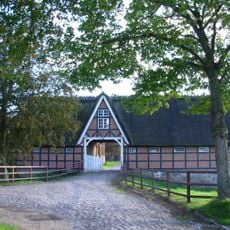
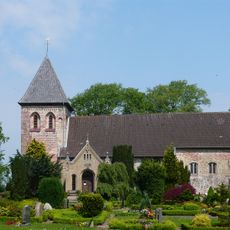
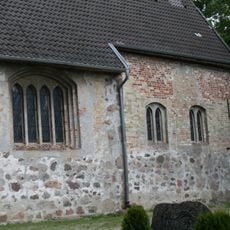
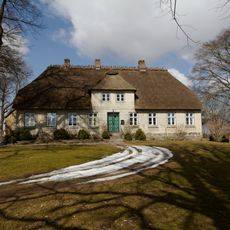
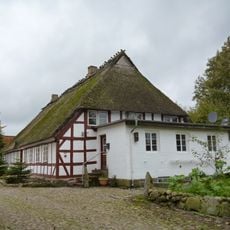
Gut Dollrott, Manor house in Dollrottfeld, Germany.
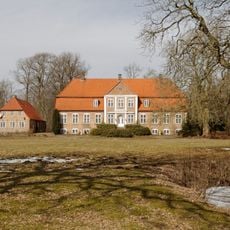
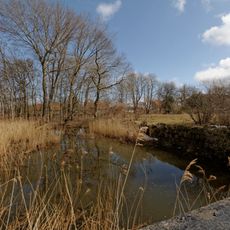
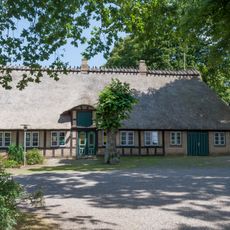
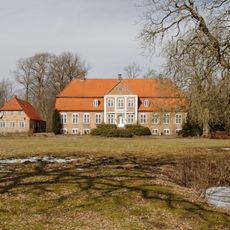
Gut Dollrott is a 17th-century estate at Dollrottfeld in Süderbrarup, on the B 201 between Süderbrarup and Kappeln in Angeln. Its core is a gatehouse converted into a manor house, with a rear central riser built in 1609 through whose arch the road once passed, and a north wing added soon after. A moat dug in the Thirty Years' War survives around much of the site.
Heinrich von Ahlefeldt built this house in 1609, though the land itself was documented centuries earlier in 1231 under the name Dolruht. This long span shows how the location developed from a medieval farming settlement into an early modern country estate.
The estate holds meaning for literary history through the childhood memories that writer Rochus von Liliencron later described in his writings. His personal connection to the place reflects how rural estates shaped the lives and imaginations of their residents.
The estate has been privately owned since 1910 and is still farmed by the same family, so the house and grounds are not open to visitors. The B 201 runs past the property between Süderbrarup and Kappeln; the water ditch dug in the Thirty Years' War survives largely and can be seen from outside. View the gate front and the 1870 farm buildings from the road.
A Danish king once visited this estate and left behind his portrait as a gift following a marriage between family members. This royal memento reveals unexpected connections to Scandinavian nobility and suggests the property's importance beyond agriculture.
The community of curious travelers
AroundUs brings together thousands of curated places, local tips, and hidden gems, enriched daily by 94,577 contributors worldwide.