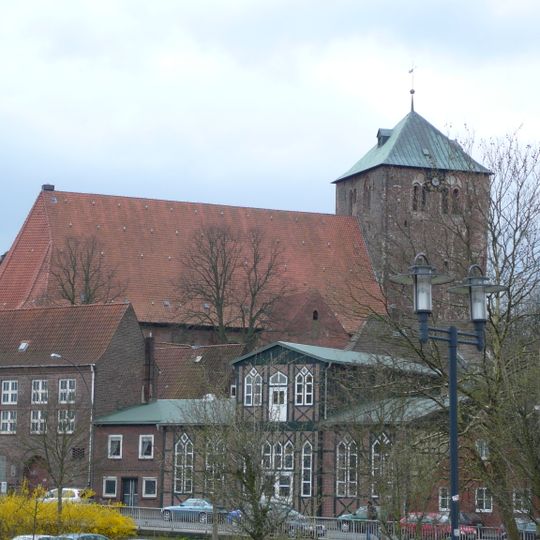
St. Wilhadi, Gothic church in Stade, Germany.
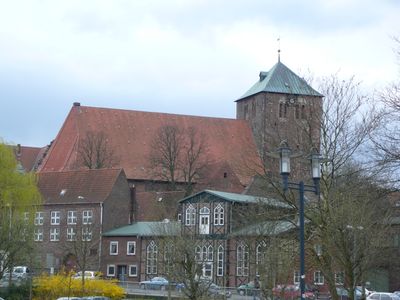
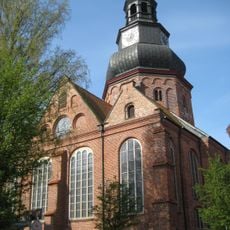
St. Wilhadi is a three-aisled vaulted hall church in brick, built from the 14th century, with a square west tower and three eastern apses, each closing in a five-eighth polygon. The nave has six bays; a two-bay vaulted Brauthaus adjoins the north aisle. The tower's flat pyramid roof with a weather vane bears the year 1765. Inside, the eastern piers are cross-shaped with rounded shafts, while the western piers are thick round columns about 40 cm stronger.
The original foundations date back to the 11th century, but the church as it stands today was built in the 14th century. A major fire in 1659 destroyed significant portions and prompted extensive reconstruction efforts.
The church is named after Willehad, the first bishop of Bremen and a missionary. Its two-bay Brauthaus, added to the north aisle, holds a confirmation hall upstairs since 1884 and two barrel-vaulted burial chambers below; carved head consoles from around 1360 show a young and an old couple. The keystones bear a Lamb of God and a pelican.
The interior is generally open for visitors when services and events are not taking place. It is worth checking in advance when you can expect to visit comfortably without disrupting any activities.
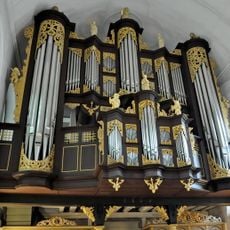
The Erasmus Bielfeldt organ was built between 1731 and 1736 and retained its historical sound after restoration in 1990. This instrument represents 18th-century craftsmanship and still produces music during services today.
The community of curious travelers
AroundUs brings together thousands of curated places, local tips, and hidden gems, enriched daily by 93,665 contributors worldwide.