Fort Hahneberg, Artillery fort in Spandau, Germany
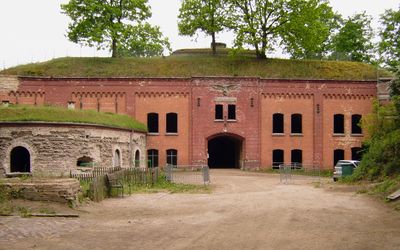
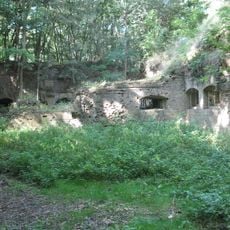
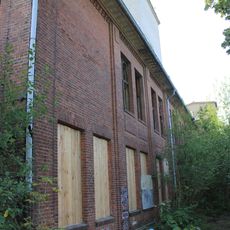
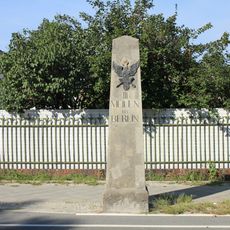
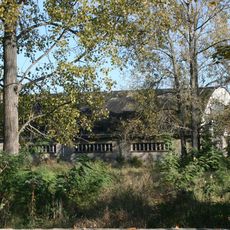
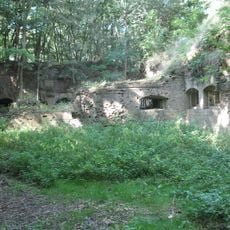
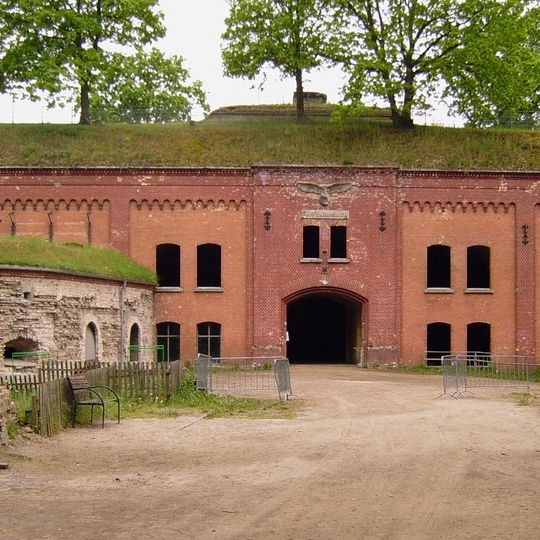
Fort Hahneberg is a hexagonal detached work sunk into the Hahneberg hill, measuring 450 by 170 metres and almost invisible from outside. Its brick walls, topped with grass, carry a rounded archway with a stone eagle relief and a blank plaque, rows of decorative brick arches and tall narrow openings. A lower rounded stone structure with a small arched window abuts the wall.
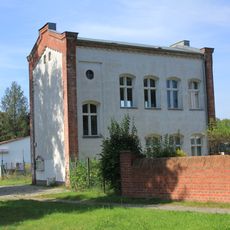
After the Franco-Prussian War of 1870/1871, four forts were planned to protect the Spandau armament centre, but only Fort Hahneberg was built; construction took six years and was completed in 1888. The introduction of high-explosive shells had already made such fortifications obsolete. From 1924 to 1934 the Flugtechnischer Verein Spandau used buildings here to construct glider aircraft.
The fort is looked after by the Arbeits- und Schutzgemeinschaft Fort Hahneberg e.V., which has been restoring it piece by piece through volunteer work since 1993. The association runs regular nature and bat walks on the grounds and takes part each year in the Tag des offenen Denkmals and in a Day of Forts organised jointly by Germany and France.
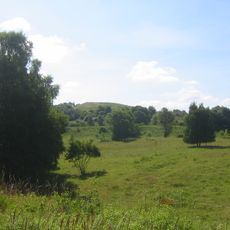
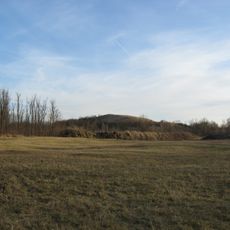
The fort lies at the western edge of Berlin near the Heerstraße border crossing; the ASG Fort Hahneberg association opens the grounds and runs guided nature and bat tours. Parts of the brick walls were removed after 1945 and rubble raised the hill to 87 m, so the surface is uneven. Sturdy shoes help on the slopes.
In 2009 the fort and its surroundings were designated a nature reserve and Fauna-Flora-Habitat area. Besides the Greater Mouse-eared Bat, other bat species winter and summer in the brick chambers, and the dry grassland and ravine forest in the moat are also protected. The volunteer association runs regular nature and bat walks.
The community of curious travelers
AroundUs brings together thousands of curated places, local tips, and hidden gems, enriched daily by 94,386 contributors worldwide.