Nothgottes, Medieval monastery in Rüdesheim am Rhein, Germany
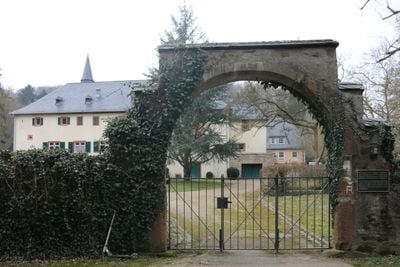
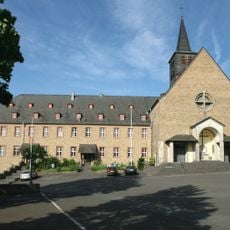
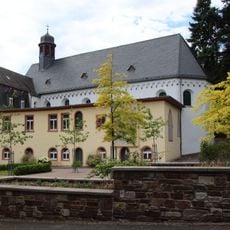
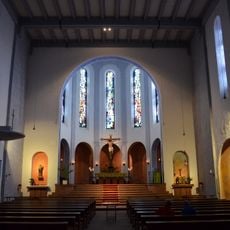
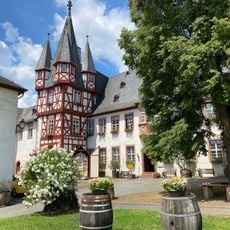
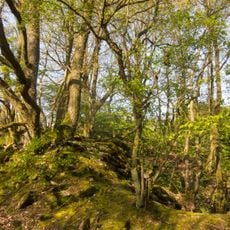
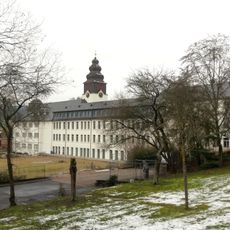
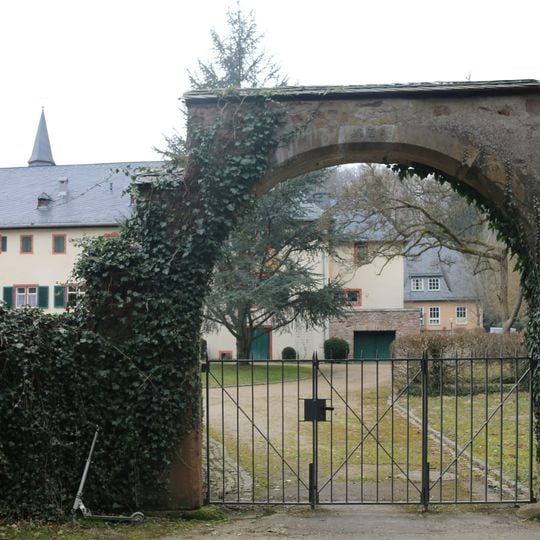
Nothgottes is a monastery set in a wooded valley of the Rheingau Hills south of Rüdesheim am Rhein, featuring a Gothic church from the 15th century. The complex comprises multiple buildings arranged around a central courtyard, with open spaces and paths leading to the surrounding countryside.
A chapel was built by Johann Brömser von Rüdesheim and consecrated in 1390, after a peasant ploughing his land found an image of Christ sweating blood and heard the call "Noth Gottes". In the 15th century the chapel was enlarged into a pilgrimage church, and from 1449 an indulgence made Nothgottes a popular pilgrimage site. A Capuchin monastery was established in 1620 and dissolved in 1813.
The name Nothgottes, "Need of God", comes from the call a Brömser peasant was said to hear while ploughing when he found the image of the sweating Christ. Each year on the first Sunday in September a foot pilgrimage from Kruft arrives, its members walking two days; the Nothgottes-Bruderschaft now numbers 60 to 80. The monks' services are open to the public.
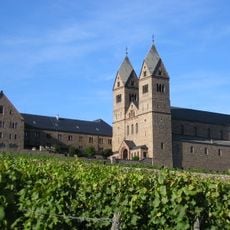
Nothgottes lies in a wooded side valley at 214 m, reached by the Nothgottesstraße running south to Windeck near Eibingen Abbey above the vineyards. The Kruft pilgrims walk two days to arrive on the first Sunday in September. The monks' services are open to the public.
The two bronze bells in the roof turret of the pilgrimage chapel were cast in 1934 by the Otto foundry in Hemelingen and survived the Nazi bell destruction. They hang in the roof turret, not a tower, and are tuned to gis'' and h''.
The community of curious travelers
AroundUs brings together thousands of curated places, local tips, and hidden gems, enriched daily by 94,072 contributors worldwide.