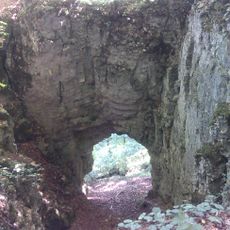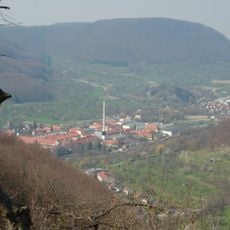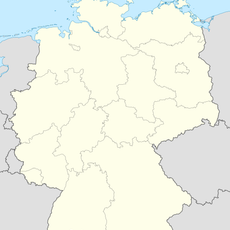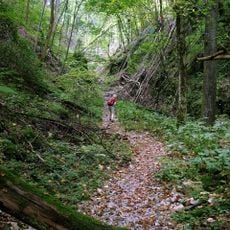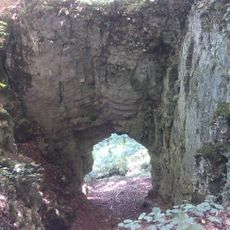
Gustav-Jakob-Höhle, Cave in Baden-Württemberg, Germany.
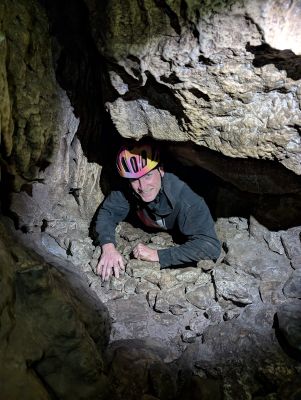
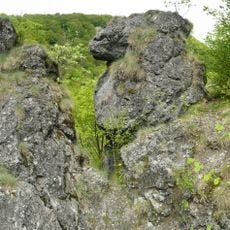
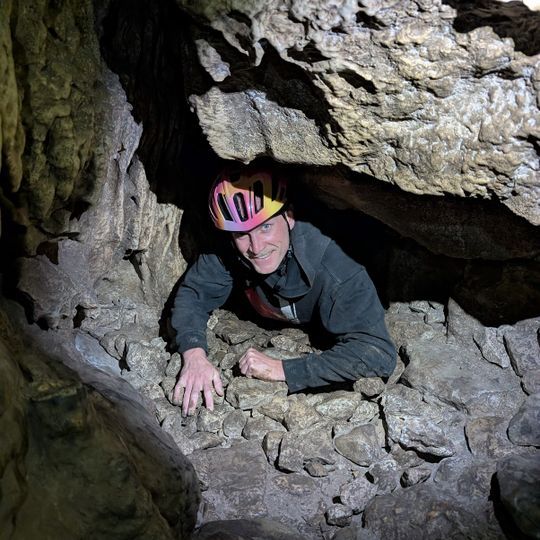
The Gustav-Jakob-Höhle is a cave system in Baden-Württemberg that runs through limestone layers and connects multiple chambers underground. The passages display natural rock formations shaped over time by water flow through the stone.
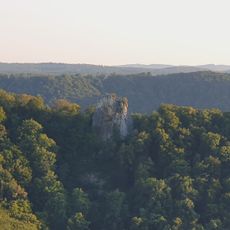
The cave was officially discovered in 1936 by Gustav Fetzer and Jakob Kazmeier, who gave it its name. It lies beneath the ruins of Hofen and follows the joints and bedding planes of the White Jurassic limestone. From 1979 to 2009 it was designated a natural monument, and it is now protected as a geotope within the UNESCO Geopark Swabian Alb.
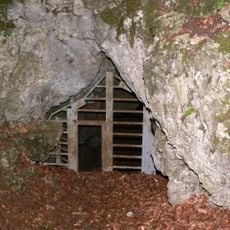
The cave's name honours Gustav Fetzer and Jakob Kazmeier, who officially discovered it in 1936. It lies beneath the ruins of Hofen, and the nearby Kleine Hofener Höhle, Talhofabri, Talhoffelstor and Ruine-Hofen-Schacht belong to the same upper Lenninger Tal cave group. From 1 October to 31 March the cave is closed as a bat hibernation site.
Visitors should bring a flashlight and wear sturdy shoes as the cave is dark and the ground is uneven. Warm clothing is necessary since the underground passages stay cool throughout the year.
About halfway along the cave, a side passage leads to the ten-metre-deep Kollektivschacht, the cave's lowest point, where carbon dioxide can collect and create a poisoning risk. The cave lies beneath the ruins of Hofen and is one of several caves in the area, alongside the Kleine Hofener Höhle, the Talhofabri, the Talhoffelstor and the Ruine-Hofen-Schacht.
The community of curious travelers
AroundUs brings together thousands of curated places, local tips, and hidden gems, enriched daily by 92,958 contributors worldwide.