Heidengraben, Archaeological site in Baden-Württemberg, Germany
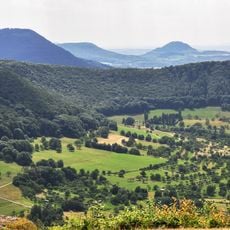
Heidengraben is a Celtic oppidum on the Grabenstettener Halbinsel, a plateau spur of the Swabian Jura at about 700 m. Its outer rampart, built as a Pfostenschlitzmauer of stone, wood and earth, runs 2.5 km and encloses over 1,700 hectares; in places it still stands 3 m high and has eight Zangentor gates, one with a 35 m entryway. The inner Elsachstadt covers 153 hectares.
The Heidengraben was likely created in the late La Tène period, around the late 2nd to early 1st century BC, and was abandoned in the first half of the 1st century BC for unknown reasons. Around 85 AD the Romans occupied the area, leaving by about 260 AD, and from the 7th century Alemanni settled it.
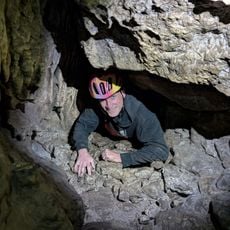
The name Heidengraben means "pagans' moat", a medieval label for the ramparts whose origin was only clarified in 1905 by Friedrich Hertlein. He also coined the name Elsachstadt for the inner settlement, after the Elsach stream that rises in the Falkensteiner Höhle below the oppidum. Excavations at the Burrenhof burial field since the mid-19th century revealed over 30 mounds, some recreated after removal by farming.
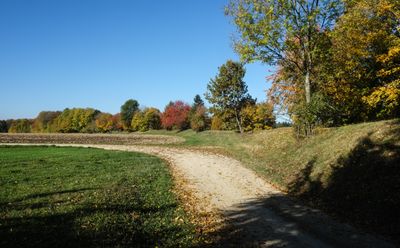
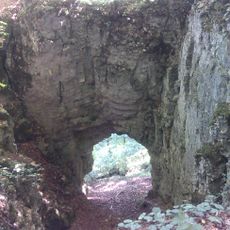
The ramparts and gates lie in open farmland around Grabenstetten, Hülben and Erkenbrechtsweiler; the 21-metre viewing tower near the Burrenhof, opened in March 2024, is reached by 102 steps. The Heidengrabenzentrum beside it opened on 7 June 2024 with 350 square metres of multimedia exhibition space. Finds from the site are shown in a museum in Grabenstetten and in the Kornhaus city museum in Kirchheim unter Teck.
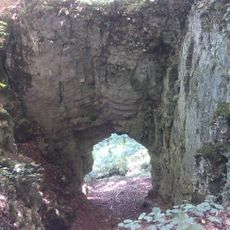
The rampart's eight gates are variants of the late Celtic Zangentor; one has a 35 m-long entryway and counts among the largest and best-preserved of its kind. The walls are Pfostenschlitzmauern of rock, wood and earth, and in places still stand about 3 m high.
The community of curious travelers
AroundUs brings together thousands of curated places, local tips, and hidden gems, enriched daily by 94,362 contributors worldwide.