Franziskaner-Klosterkirche, Gothic church ruins in Mitte, Germany.
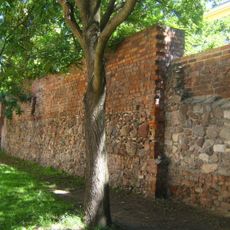
The Franziskaner-Klosterkirche is a Gothic monastery church built from brick with early Gothic design features in Berlin's Mitte district. The structure preserves its original walls, arches, and angular forms that define the building's exterior and interior spaces.
This church was founded in 1250 as a Franciscan monastery and served religious purposes until 1539. The Protestant Reformation led to its closure as a monastery, after which the building underwent various uses and transformations over the following centuries.
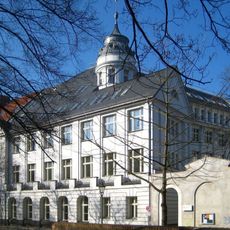
The name Graues Kloster (Grey Monastery) came from the grey habit of the Franciscan friars. After the monastery closed in 1539, its buildings housed Berlin's first printing press from 1571, run by Leonhard Thurneysser, and the Evangelisches Gymnasium zum Grauen Kloster from 1574, whose pupils and teachers included Karl Friedrich Schinkel and Friedrich Ludwig Jahn. The brick ruins have hosted exhibitions, plays and concerts since the 1980s.
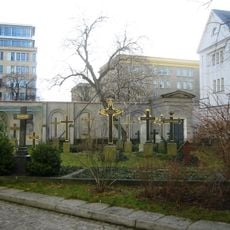
The ruin stands on Klosterstraße in Mitte, set in a paved open space with three circular skylights in the ground before the walls. The site is open-air and unroofed, so the brickwork and stone floor are exposed to rain and sun. The L-shaped walls and low niches along the base are best examined up close on foot.
The monastery buildings that once stood beside the church housed Berlin's first printing press from 1571, run by Leonhard Thurneysser, who also restored the church in 1583–1584. The same complex became the Evangelisches Gymnasium zum Grauen Kloster in 1574, where Karl Friedrich Schinkel and Friedrich Ludwig Jahn studied and Otto von Bismarck visited.
The community of curious travelers
AroundUs brings together thousands of curated places, local tips, and hidden gems, enriched daily by 93,647 contributors worldwide.