Kloster Germerode, Monastery in Germerode, Germany
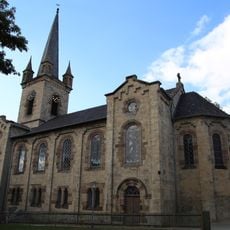
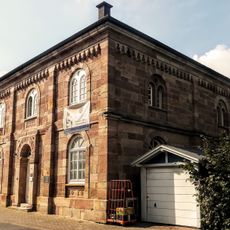
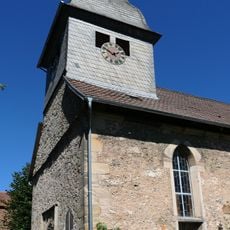
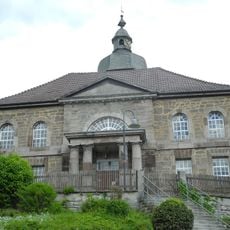
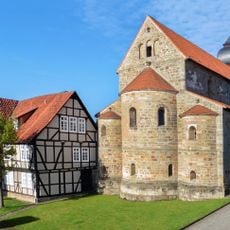
Kloster Germerode is a former Premonstratensian convent at the foot of the Hoher Meißner, 13 km from Eschwege. Its 12th-century church of St. Mary and Walpurga is a vaulted Romanesque pillar basilica modelled on Lippoldsberg, with a three-aisled raised choir over a four-aisled hall crypt. Of the convent buildings only the refectory, completed around 1220, survives.
Founded in 1144/45 by Count Rugger II of Bilstein as a house monastery for his family, Germerode was a regulated double foundation of Premonstratensian canons and noble choir nuns. The church was built between 1150 and 1170 under Count Otto I of Bilstein. After about a century the double house became a nuns' convent, dissolved in 1527 under Landgrave Philipp during the Hessian Reformation; the last prioress was Mechtilde von Keudell.
The church is dedicated to Saint Mary and Saint Walpurga. Its two-storey westwork held the nuns' gallery, screened from the nave by an arcaded parapet, while the canons used the nave and choir; the ground-floor hall beneath, with four pairs of columns, is called the nuns' crypt. The carved Baroque galleries were installed after 1600.
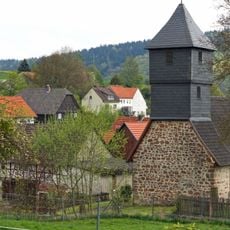
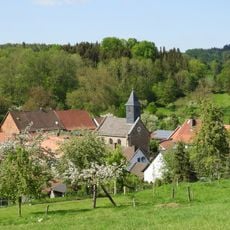
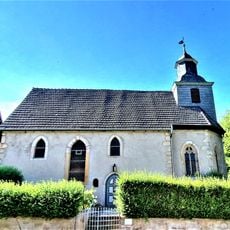
The former monastery lies in Germerode, part of the Meißner municipality, at the foot of the Hohen Meißner, 13 km from Eschwege. Of the monastic buildings only the church and the refectory remain, so a visit centres on these two structures. The church is now the Protestant parish church of Germerode.
The complex now serves as a conference center while maintaining spiritual activities through meditation programs and religious services. This dual purpose shows how the site continues its contemplative function in a contemporary way.
The community of curious travelers
AroundUs brings together thousands of curated places, local tips, and hidden gems, enriched daily by 93,098 contributors worldwide.