Klosterbergegarten, Public park in Magdeburg, Germany
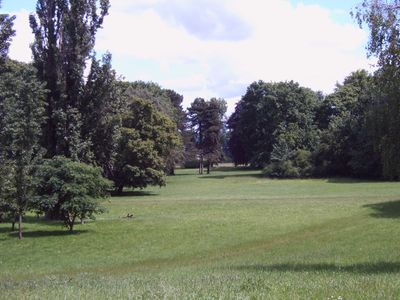
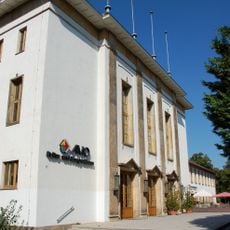
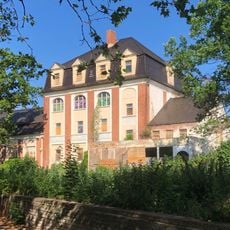
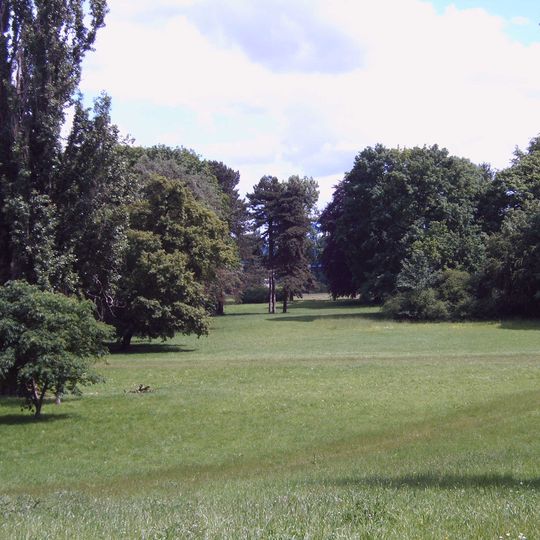
The Klosterbergegarten is a park of 11 hectares on the western bank of the Elbe in the Buckau district. Its layout goes back to a design by Peter Joseph Lenné, and the grounds contain the Gesellschaftshaus with the Schinkel Hall, the Gruson Greenhouses consecrated in 1896, and a bust of Lenné by Heinrich Apel from 1989.
Peter Joseph Lenné designed this park in 1825 on the grounds of a former monastery destroyed by French troops during the Napoleonic Wars. The Gruson Greenhouses were added in 1896, expanding the site with scientific gardens.
The Schinkel Hall in the society house displays early 19th-century German architecture and hosts regular concerts today. The place brings together culture and nature, drawing visitors who want to experience classical music within green surroundings.
The park lies on the western bank of the Elbe in the Buckau district, covering 11 hectares. The grounds are level and crossed by broad footpaths, with the Gesellschaftshaus and the Schinkel Hall at its centre. A former railway line through the park, the Magistratsstrecke, was removed in 2002, so paths now run uninterrupted. The park belongs to the Gartenträume Sachsen-Anhalt network.
The park was renamed Klosterbergegarten in 1921, but from 1950 to 1990 it was officially called Pionierpark, after the Thälmann Pioneers who used the society house as a Pionierhaus from 1 June 1950. A traffic garden for children was laid out in 1966.
The community of curious travelers
AroundUs brings together thousands of curated places, local tips, and hidden gems, enriched daily by 94,951 contributors worldwide.