Seemannskirche, Lutheran church in Prerow, Germany
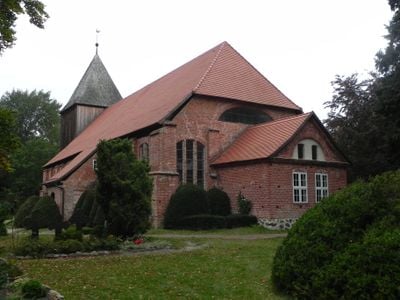
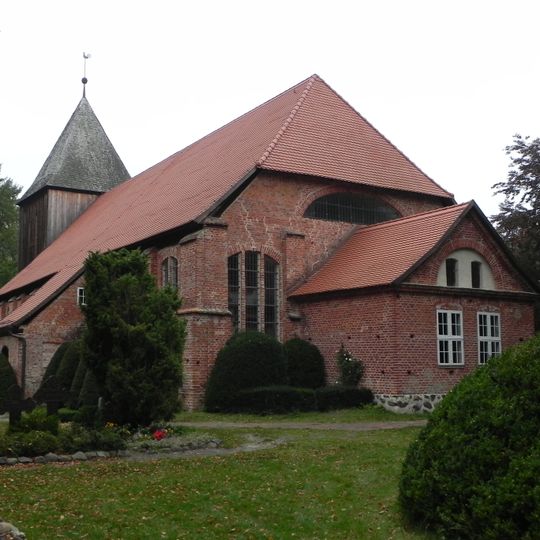
The Seemannskirche is a church building in Prerow on the German Baltic coast, distinguished by its characteristic red brick masonry and wooden tower roofed with oak shingles. The structure houses three bells within the tower and stands as an important landmark in the seaside village.
Built from 1726 to 1728 as a half-timbered church, it replaced an older church that stood slightly to the east. Between 1740 and 1830 the structure was rebuilt in brick, giving it its present form. The wooden tower dates from 1727. In 1872 the Baltic storm flood reached the cemetery wall, and the church and parsonage narrowly escaped.
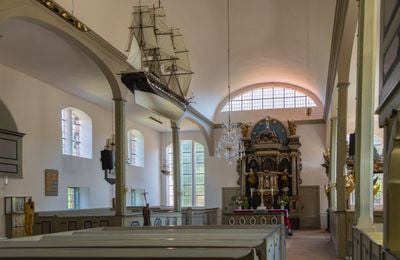
The name reflects the deep connection to seafaring - sailors came here to leave offerings of gratitude for surviving disasters at sea. The collection of ship models displayed inside tells stories of personal thanks and the importance this place held for people whose lives were shaped by the ocean.
The church stands in the centre of Prerow, a short walk from the Baltic beach. A sign at the entrance and a flood mark on the cemetery wall recall the 1872 storm flood. The building is used for Lutheran services and also for Catholic worship, so visits may be limited during services.
In 1911 Marianne von Werefkin and Alexej Jawlensky painted the church while staying in Prerow for the summer. Werefkin's painting Kirchgang in Prerow has been missing for decades, but Jawlensky's view of the church from the southeast reappeared in the art trade in 2012.
The community of curious travelers
AroundUs brings together thousands of curated places, local tips, and hidden gems, enriched daily by 93,671 contributors worldwide.