Kloster Gotteszell, Cistercian monastery in Gotteszell, Germany
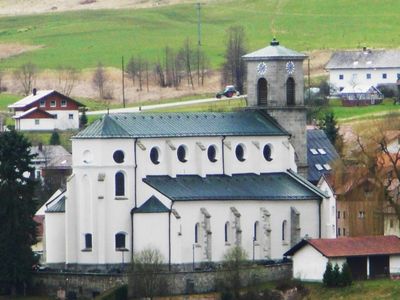
Kloster Gotteszell is a Cistercian monastery in the municipality of Gotteszell in Bavaria with a group of historical buildings arranged around an inner courtyard. The complex includes a church, living quarters for monks, a kitchen, library, and workshops all built following the traditional layout typical of monasteries in this religious order.
Founded in 1285 by knight Heinrich von Pfelling as a daughter house of Aldersbach, the monastery was raised to an abbey in 1320 with Berthold as first abbot. A fire damaged church and buildings in 1629, and Swedish troops occupied the site in 1633/34 and 1641. It was dissolved on 24 March 1803 during secularisation; the abbey church became the parish church.
The monastery became a centre of devotion to Saint Anne in the 15th century, when her cult spread widely in Germany. The high altar from the 17th century holds the image of Anna selbdritt in a halo of rays, and the tabernacle with two side reliefs and two adoring angels was made by sculptor Joseph Deutschmann.
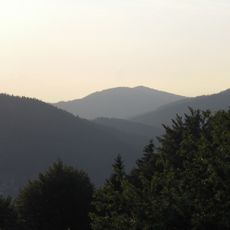
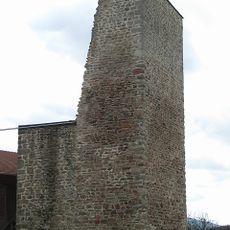
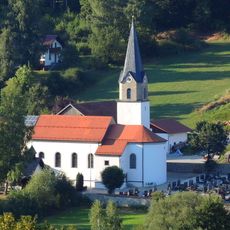
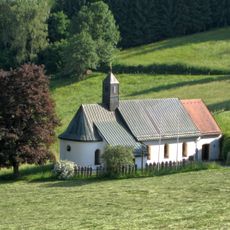
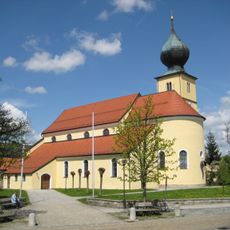
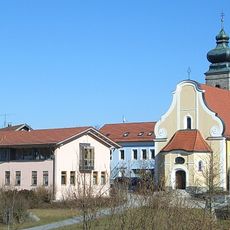
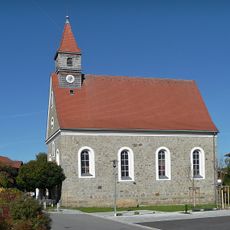
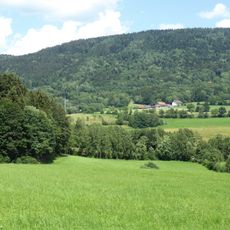
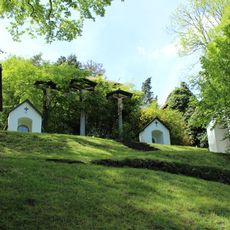
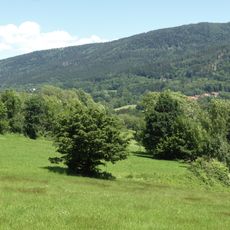
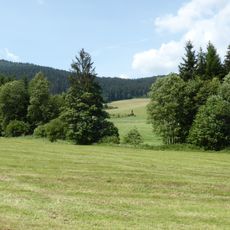
The former abbey church, now the parish church of St. Anna, stands in the centre of Gotteszell; the surviving south and part of the west convent wings adjoin it, and a polygonal oriel tower on four columns rises beside the gateway. West of the church is a Kalvarienberg (calvary) complex. The site lies in the Bavarian Forest, so paths can be wet; the church interior is the main space to see.
The 1895 story "Der Prälatenschatz" by Maximilian Schmidt tells of a treasure hidden when the abbey was dissolved in 1803. The tale is set in the former monastery, and the church's choir fresco of the Assumption by Cosmas Damian Asam, painted over, was only uncovered again in 1940.
The community of curious travelers
AroundUs brings together thousands of curated places, local tips, and hidden gems, enriched daily by 94,571 contributors worldwide.