Museum für Ur- und Frühgeschichte Eichstätt, museum
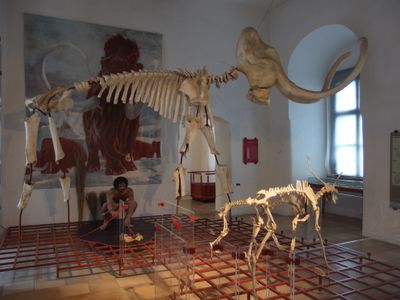
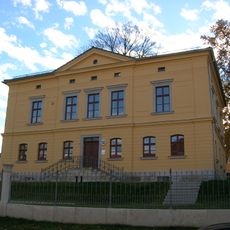
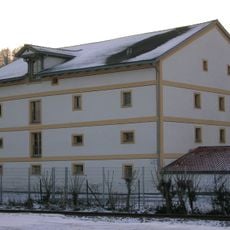
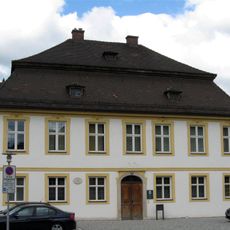
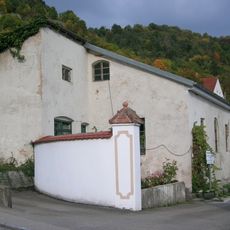
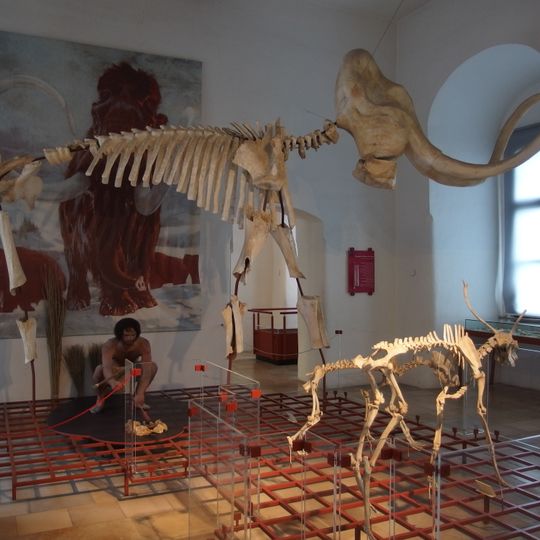
The Museum für Ur- und Frühgeschichte Eichstätt is a history museum housed on the first floor of the Gemmingen Building at Willibaldsburg, displaying the human settlement of the region from the Stone Age through the early medieval period. The exhibition includes bone remains of extinct large animals such as mammoths and cave hyenas, stone tools, a rare Roman surveyor's device called a Groma, and Merovingian artifacts, all arranged in chronological order.
The museum was founded in 1886 and documents human presence in the region over millennia, from the earliest traces through Christianization in the early medieval period. The collection shows how settlement developed and how external influences such as Roman expansion and later Germanic settlement shaped the region.
The museum's name reflects its focus on the earliest human settlement and development in the region, spanning from prehistoric to early medieval times. Visitors see original objects that show how daily life and craftsmanship changed over thousands of years, making the past tangible and understandable.
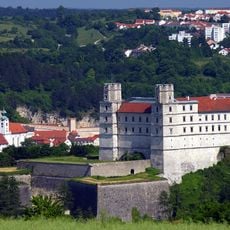
The museum is located on a hilltop at Willibaldsburg and is accessible by road, with parking available near the castle and overflow parking below the fortification or at a nearby vocational school about 400 meters away during weekends. Visits can be self-guided or with a scheduled tour arranged in advance through the Historical Society of Eichstätt.
The museum houses the only Groma north of the Alps, a rare Roman surveyor's tool that offers insights into Roman land measurement and administration of the region. Additionally, a detailed model of the Roman fortress Pfünz is displayed with about 500 painted miniature figures representing life around 200 AD.
The community of curious travelers
AroundUs brings together thousands of curated places, local tips, and hidden gems, enriched daily by 60,000 contributors worldwide.