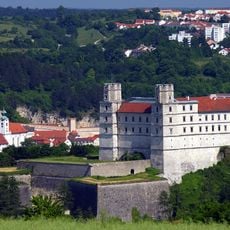
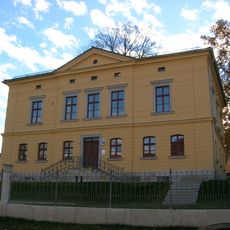
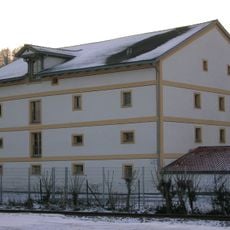
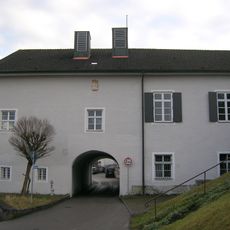
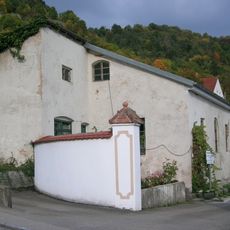
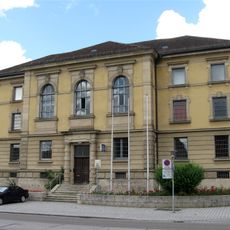
Jura Museum, Natural history museum in Willibaldsburg castle, Eichstätt, Germany.
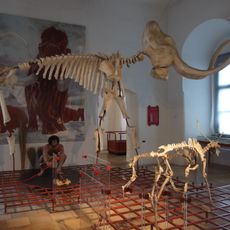
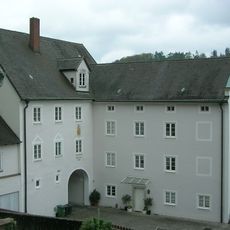
The Jura Museum occupies Willibaldsburg castle above the Altmühl valley in Eichstätt. Its galleries display fossils from the Solnhofen limestone, formed in a tropical reef and lagoon of the Jurassic period. Among them are an original Archaeopteryx, a Juravenator, and a Confuciusornis. Aquariums with tropical fish, corals and a coral reef compare these fossils with living animals.
The museum opened in 1976, initiated by the Eichstätt professor Franz Xaver Mayr, who died in 1974 and did not live to see it. Günter Viohl directed it from 1976 to 2003, when annual visitors peaked above 120,000; Martina Kölbl-Ebert led it from 2003 to 2019. Until 30 June 2019 the Bishop's Seminary St. Willibald ran the museum; since 1 July 2019 the foundation of the Catholic University of Eichstätt-Ingolstadt has been the responsible body. After renovation it reopened on 9 January 2020.
The museum's name refers to the Jurassic period when the fossils formed. Visitors can see how an ancient sea once covered this area and what creatures inhabited those waters.
The museum sits on the Willibaldsburg above the Altmühl valley, so reaching it from Eichstätt town centre means a climb up to the castle. It closed for renovation on 1 January 2019 and reopened on 9 January 2020, with building work continuing afterwards. The scientific direction passed from Alexander Nützel, interim head from September 2019, to Christina Ifrim on 1 February 2020.
A special feature of the museum is a hall with a living coral reef where visitors can see modern ocean life alongside ancient fossils. This creates a bridge between the distant past and the living oceans of today.
The community of curious travelers
AroundUs brings together thousands of curated places, local tips, and hidden gems, enriched daily by 94,300 contributors worldwide.