Kloster Möllenbeck, Medieval monastery in Rinteln, Germany.
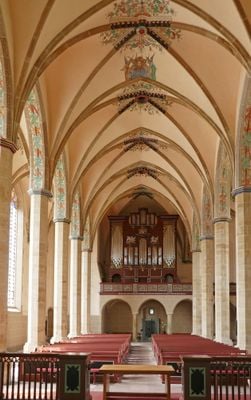
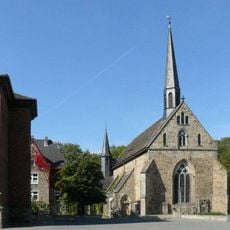
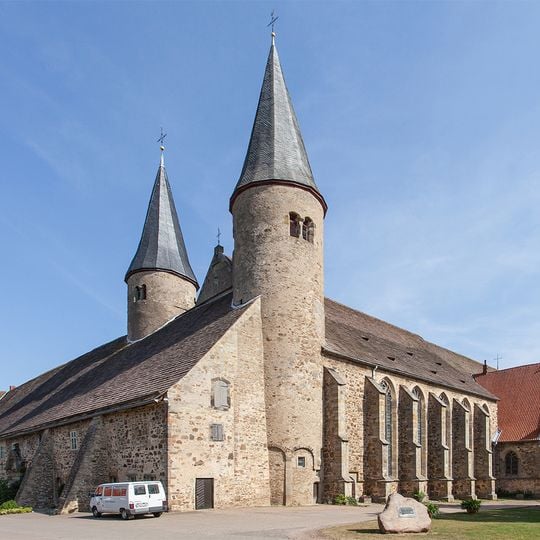
Kloster Möllenbeck is a medieval monastery complex in Rinteln with a three-nave hall church built in 1505. The structure displays rectangular windows, a choir section, and a sacristy extension set within thick stone walls.
Founded in 896 by the noblewoman Hildburg as a canoness foundation and confirmed by Emperor Arnulf of Carinthia, Möllenbeck is among the oldest abbeys in the Weser valley. In 1441 it was dissolved and handed to Augustinian canons, who lost the entire complex and its library to a major fire in 1474. The church, cloister and convent buildings were rebuilt between 1478 and 1505. After the Reformation was introduced in Schaumburg in 1558, prior Hermann Wenig and the whole convent converted to Lutheranism.
The monastery began as a canoness foundation in 896 and became an Augustinian canons' house in 1441. After 1558 the canons adopted Lutheranism but kept their monastic rule, habit and choral prayer, sung in German, and ran a Latin school to train pastors. The preacher Petrus Grener, the last canon, died in 1675.
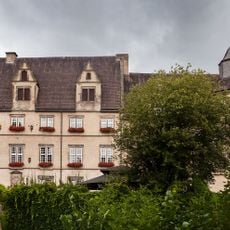
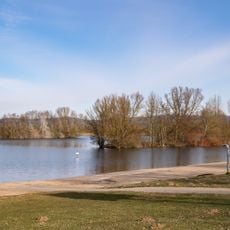
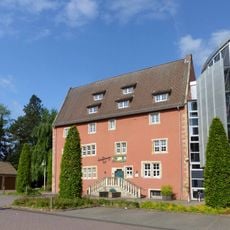
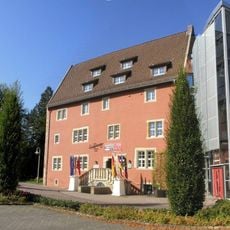
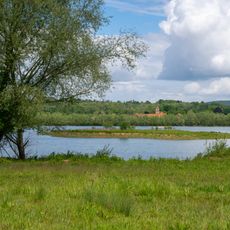
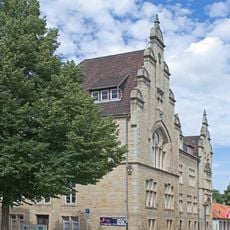
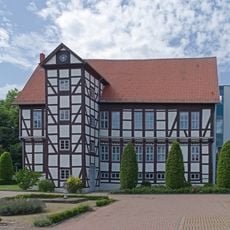
The complex lies in the Weser meadows near Rinteln, with the church, cloister and convent wings grouped around a square. The church serves as the Protestant parish church of Möllenbeck. The west gable, facades, roof and winter refectory were restored from 1995 in several stages with support from the Deutsche Stiftung Denkmalschutz.
The two round towers and the crypt are the only survivors of the 1474 fire; the crypt holds a massive, plain sarcophagus from around 900, probably containing the bones of the founder Hildburg. A Romanesque tumba fragment with fine figure carving was linked to this grave and is now walled in at the church entrance.
The community of curious travelers
AroundUs brings together thousands of curated places, local tips, and hidden gems, enriched daily by 93,018 contributors worldwide.