Weserbrücke Eisbergen, Road bridge in Eisbergen, Germany
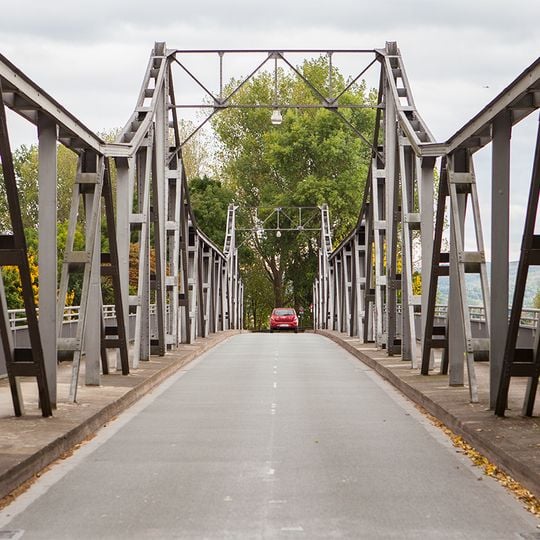
Weserbrücke Eisbergen, officially Landrat-Petersen-Brücke, is a 148-metre steel truss cantilever bridge over the Weser. It rests on two concrete pillars and carries a concrete roadway, linking Eisbergen with fields and Möllenbeck in Lower Saxony. A 1968 widening added footpaths on both sides.
Planning began in 1909, but World War I halted the start; construction ran from October 1919 to the inauguration on 13 December 1920, funded partly by Eisbergen farmers who owned land across the Weser. German engineers blew up the lightly damaged bridge on 3 April 1945, and it was rebuilt in 1946; cuffs are still visible on some struts. The 1968/69 restoration strengthened the truss for 30 instead of 12 tonnes.
The bridge is officially named Landrat-Petersen-Brücke after Erich Petersen, the Minden district administrator who pushed for its construction. Until 1920 a deep-wire ferry crossed here, criticized for obstructing growing river shipping. The 1925 toll house also served as a drinks counter and barber shop.
The bridge is closed to trucks over 3.5 tonnes because of structural damage; a 2022 renovation was intended but the concrete pillars show cracks and the abutments need replacing. The 1968/69 widening added a footpath on both sides, so pedestrians and cyclists can still cross alongside traffic.
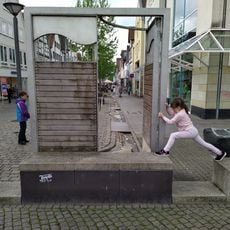
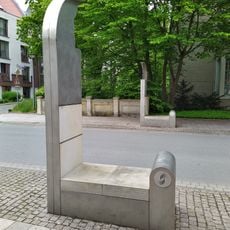
A wooden figure known as 'The Milkmaid' stands nearby, honoring women who crossed the river daily from 1820 to 1970 to milk cows on the opposite bank. This sculpture preserves the memory of a way of life when work and river crossing shaped the daily rhythm.
The community of curious travelers
AroundUs brings together thousands of curated places, local tips, and hidden gems, enriched daily by 93,744 contributors worldwide.