Roter Bär Pit, Show mine in Sankt Andreasberg, Braunlage, Germany
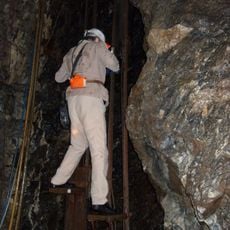
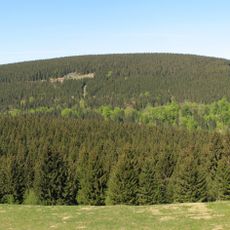
The Roter Bär Pit is an iron ore mine in the Bären valley at the foot of the Knöchel, east of Sankt Andreasberg. Its surface gallery and shallow workings follow brown iron ore that occurs as lens-shaped inclusions in a Middle Devonian shale-limestone series. The mine is run as the Roter Bär Pit Educational Mine by the Sankt Andreasberg Society for History and Archaeology.
The Roter Bär Pit was worked from about 1800 until the mid-1860s by private operators (Eigenlehner) with only 4–6 men, producing 50–60 tons of brown iron ore a year. Its sole buyer was the Hanoverian state's Königshütte smelter in Lauterberg. After Hanover passed to Prussia in 1866 and the smelter switched to charcoal blast furnaces in 1871, the ore lost its market and the mine was abandoned. From 1920 the Ilseder Hütte reopened it for prospecting until 1923.
The name Roter Bär means "Red Bear". Since 1931 the Sankt Andreasberg Society for History and Archaeology has run the pit, and restoration funds were raised the old way, through a mining trades union and share certificates. Today volunteers of its mining working group keep the galleries open.
Visitors typically enter the underground sections with a guide who explains the tunnels and mining techniques used here. Wear appropriate clothing for cool, damp conditions below ground.
During the air raids of April 1945 the gallery served as an air-raid shelter and saved the lives of many people who fled there during the fighting. In winter it now shelters bats, and it also supplies drinking water.
The community of curious travelers
AroundUs brings together thousands of curated places, local tips, and hidden gems, enriched daily by 94,314 contributors worldwide.