Grassi Museum, Museum complex in Leipzig, Germany
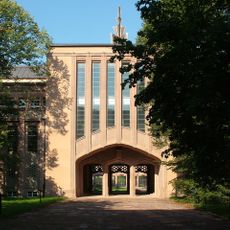
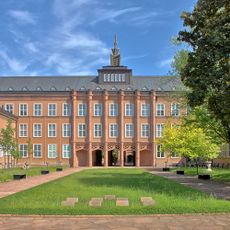
Grassi Museum is a building complex in Leipzig housing three separate collections under one roof. It contains the Museum of Applied Arts, the Museum of Musical Instruments, and the Museum of Ethnography, displaying diverse objects from crafted works to rare instruments and cultural items.
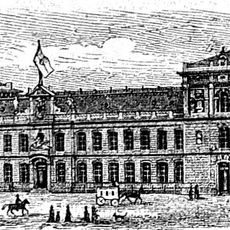
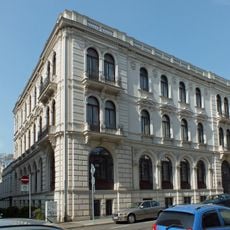
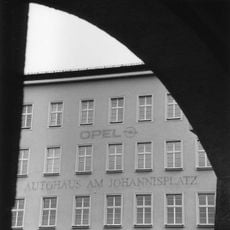
The museum is named after Franz Dominic Grassi, a Leipzig merchant of Italian descent who left the city over two million marks on his death in 1880. The first Grassi Museum was built 1892–1895 on the Königsplatz; the present complex at Johannisplatz, designed by Zweck & Voigt under Hubert Ritter, was built 1925–1929 on the site of the old Johannis Hospital. Bombed in 1943, it was rebuilt from 1947 and fully restored 2001–2005.
The Museum of Applied Arts displays crafted objects from many cultures that visitors encounter while walking through the galleries. The musical instruments on display come from around the world and show different traditions through their shapes and materials.
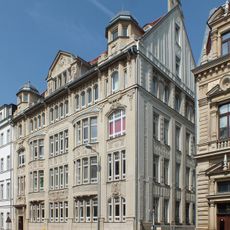
The complex is entered from Johannisplatz, where its two wings open between Dresdner Strasse and Prager Strasse. The three museums share the building, so you can move from one collection to the next without going outside. The Grassimesse trade fair fills the halls on the last weekend of October, when around 100 exhibitors show current work.
The building blends elements of New Objectivity with detailed Art Deco ornaments visible in the staircases and galleries. This architectural mix shows the transition between different design movements of the early modern era.
The community of curious travelers
AroundUs brings together thousands of curated places, local tips, and hidden gems, enriched daily by 93,630 contributors worldwide.