GRASSI Museum of Applied Arts Leipzig, Museum of Decorative Arts at Johannisplatz, Leipzig, Germany
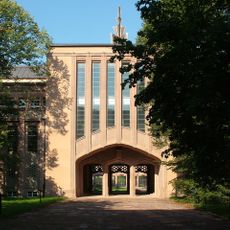
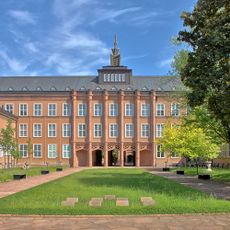
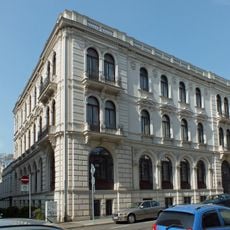
The GRASSI Museum of Applied Arts Leipzig occupies the New Grassi Building on Johannisplatz, a complex shared with the Museum of Ethnography and the Museum of Musical Instruments. Its galleries hold around 90,000 objects of European and non-European decorative art, from antiquity to the present, with a focus on the 1920s and 1930s. A highlight is the Roman Hall, with panels salvaged from a palace in Eythra demolished for coal mining.
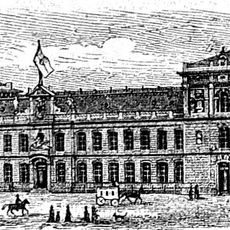
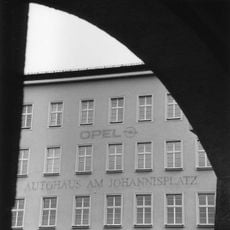
The museum opened in 1874 as the Kunstgewerbemuseum, founded by a society of Leipzig citizens including Fritz von Harck, and was housed in the Altes Amtshaus. In 1895 the growing collection moved into the Altes Grassimuseum, funded by a bequest from merchant Franz Dominic Grassi; the city took over the museum in 1904. Since 1926 it has occupied the Neues Grassimuseum on Johannisplatz, damaged in World War II and fully renovated from 2001 to 2006.
The museum displays everyday objects alongside fine craftsmanship, showing visitors how ordinary things were once made and used. The rooms dedicated to Art Nouveau and Art Deco design are a good place to see how taste and making traditions shifted from one generation to the next.
The museum occupies the New Grassi Building on Johannisplatz, east of the city centre, sharing the address with the ethnography and musical instrument museums. The Roman Hall with its salvaged Eythra panels is a highlight worth seeking out. The building was fully refurbished between 2001 and 2006, so circulation areas are modern.
The stairwell windows were designed by Bauhaus artist Josef Albers and carefully reconstructed after they were destroyed during the war. This makes the stairwell one of the few places where Bauhaus glass art can still be seen in a museum building.
The community of curious travelers
AroundUs brings together thousands of curated places, local tips, and hidden gems, enriched daily by 92,669 contributors worldwide.