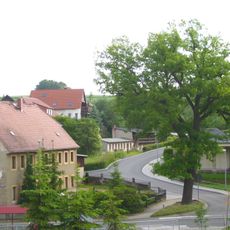
Götzenbüschchen, Hill summit in Rabenau, Germany
Götzenbüschchen is a hill in the Sächsische Schweiz-Osterzgebirge district positioned between the Roter Weißeritz and Oelsabach rivers. The site displays layered geological formations with sandstone-bearing soils and rock structures from the Cretaceous period.
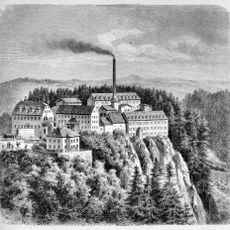
Before Christianisation in the 10th century, the Slavic deity Püstritz was worshipped here; a stone image of Püstritz is said to have stood in the Götzenbüschchen until Bishop Benno of Meissen had it removed in 1068. In the 19th century several sandstone quarries were opened, and quarrying ceased in 1960. The area is now a protected natural monument on private land.
The name recalls the Slavic deity Püstritz, worshipped here before Christianisation in the 10th century; a stone image of the god is said to have stood in the wood until Bishop Benno of Meissen had it removed in 1068. The chronicler Schmelz links the name to the Weißeritz river and the villages of Pesterwitz and Possendorf.
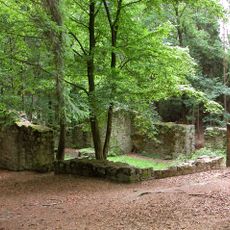
The sandstone cliffs stand on private land in the Großoelsa cadastre and may not be entered; a path around the outside still gives a good view of the rock faces. The old trade road from Rabenau to Dippoldiswalde passes the site, and the former Grünes Waldschlößchen inn stands at the end of the cliffs toward Rabenau.
The violet-red gneiss exposed at the western base was lateritically weathered under subtropical conditions before the Cretaceous period, as shown by several-metre-thick outcrops. The site also yielded finds of the bivalve Inoceramus pictus in the Cretaceous sandstone.
The community of curious travelers
AroundUs brings together thousands of curated places, local tips, and hidden gems, enriched daily by 94,256 contributors worldwide.