Güstrow Cathedral, Lutheran cathedral in Güstrow, Germany
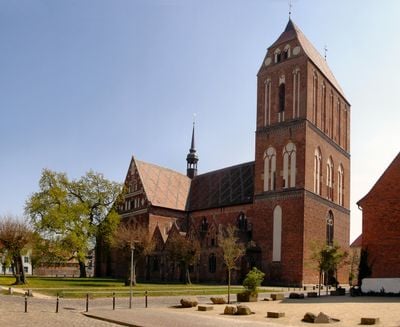
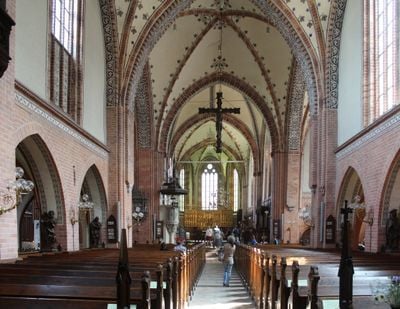
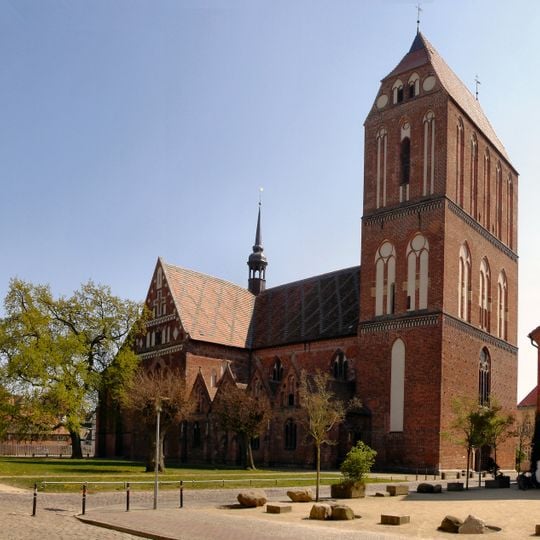
Güstrow Cathedral is a Brick Gothic basilica with a 44 m square west tower topped by a steep pyramidal roof and cross. The nave has a steep tiled roof, a slender spire at the tower junction, and a stepped gable with patterned brickwork at the left end. Inside, pointed ribbed vaults rest on slender brick piers with painted foliate ornament, and a dark wooden crucifix hangs beneath the central vault.
The church began as a collegiate foundation in the 13th century and became a Lutheran place of worship following the Reformation in the 16th century. This religious shift reshaped its purpose and use over time.
The cathedral houses the Floating Figure, a modern bronze sculpture suspended inside that draws visitors from far and wide. The medieval apostle statues by Claus Berg shape the interior and show the artistic strength of earlier times.
The cathedral is open to visitors and allows exploration of the interior spaces, side naves, and burial chambers. The best time to visit is outside worship hours when there is more room for quiet viewing.
The church's most celebrated artwork, Ernst Barlach's suspended sculpture Der Schwebende, was removed by the Nazis in 1937 as "degenerate art" and melted down in 1941; the figure now hanging in the nave is a 1952 recast, moved in 1985 to the eastern bay of the north aisle facing west.
The community of curious travelers
AroundUs brings together thousands of curated places, local tips, and hidden gems, enriched daily by 93,998 contributors worldwide.