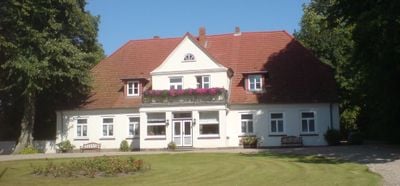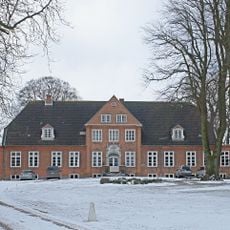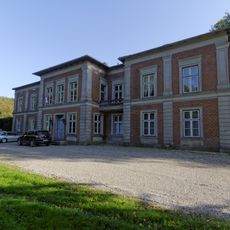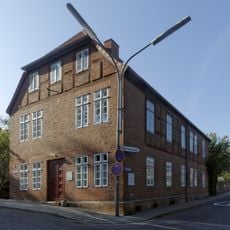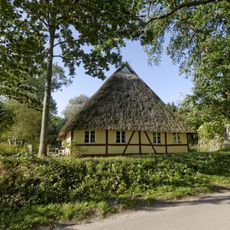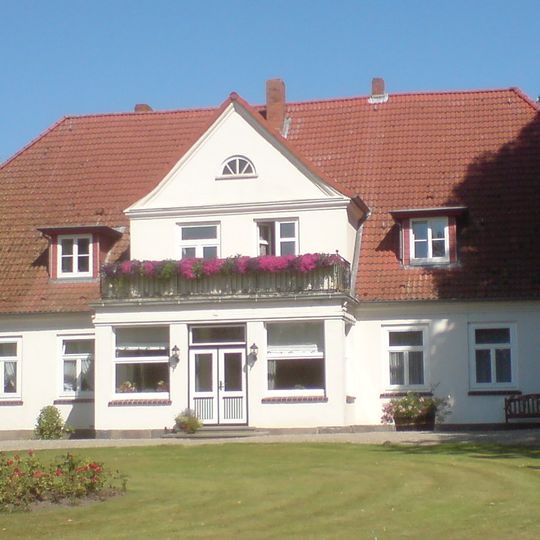
Gut Neu-Bülk, Estate in Strande, Germany.
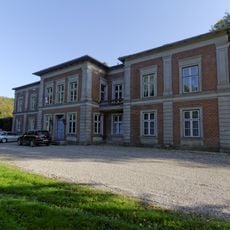
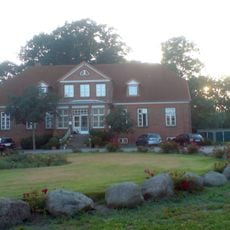
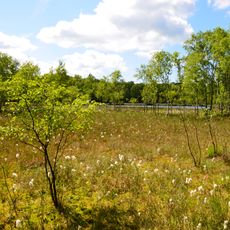
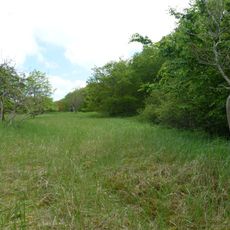
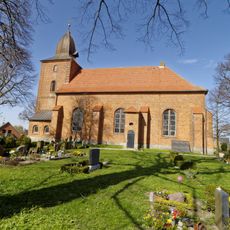
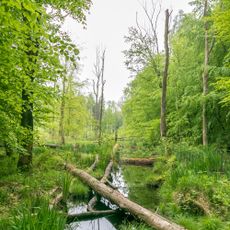
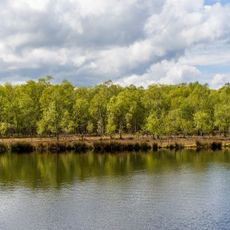
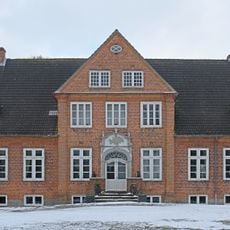
Gut Neu-Bülk is an estate in Strande comprising forested areas, cultivated fields, and meadows that form its working landscape. The property includes residential and farm buildings typical of a northern German manor complex.
Claus Christoph I von Thienen (1657–1708) built the Ravensbek manor in 1708 as a majorat of the Bülk estate; it was enlarged in 1718, separated from Bülk and took the name Neu-Bülk. In 1927 the Schleswig-Holsteinische Höfebank bought the estate under the 1919 Reich Settlement Act and split off 93.94 hectares into eleven settler plots, reviving the former village of Ravensdorp as Rabendorf. Carl-Albrecht Rodde bought the remaining 196.01 hectares in 1931.
The name Neu-Bülk (Danish: Ny Bylk) means "New Bülk", adopted in 1718 when the manor was separated from the Bülk estate. The old village of Ravensdorp, absorbed into the estate, was revived in 1927–30 when settler plots were laid out on its former land and the settlement took the name Rabendorf. Six cottages of the former village became houses of the new Rabendorf.
The estate functions as an active agricultural property integrated into working farmland systems. Access should be respectful of ongoing farming operations and the private nature of the working grounds.
Neu-Bülk was split off from the Bülcke estate in 1718, when the Ravensbek manor built in 1708 by Claus Christoph I von Thienen was enlarged and separated from Bülcke, taking the name Neu-Bülk (New Bülk). The old village of Ravensdorp, absorbed into the estate, returned as Rabendorf when the land was settled in 1927–30.
The community of curious travelers
AroundUs brings together thousands of curated places, local tips, and hidden gems, enriched daily by 94,473 contributors worldwide.