Schloss Panker, Estate and château in Panker, Germany
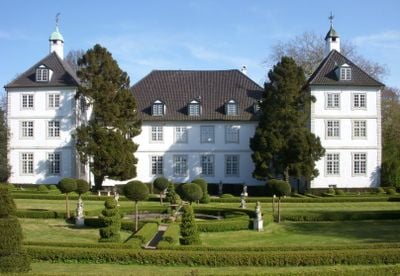
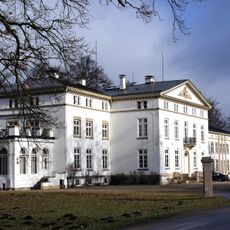
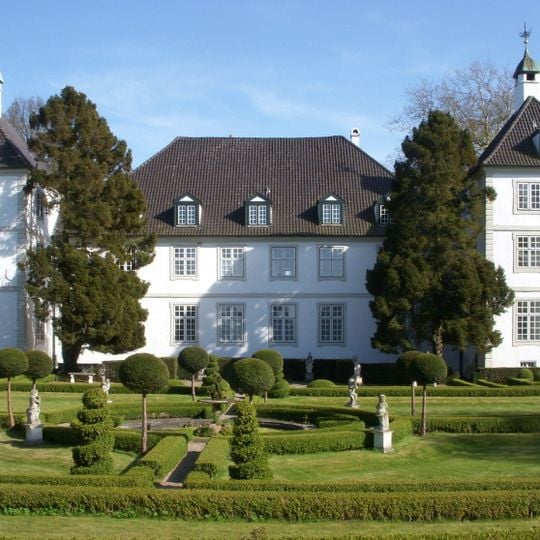
Schloss Panker is a white, two-story manor house with a steep, dark tiled roof and three dormer windows. Its symmetrical front has rows of tall, many-paned windows, and a section with a small spire adjoins the right side. The building evolved over centuries around a core built around 1650.
The Rantzau family held Panker from the late 14th century until 1739, when Countess Hedvig Ulrica Taube bought it with funds from Landgrave Frederick of Hesse, King of Sweden, to provide for their sons. In 1741 the sons were made Counts of Hessenstein. In 1808 the estate passed to Landgrave Charles of Hesse-Kassel, and since 1928 it has belonged to the Hessian House Foundation.
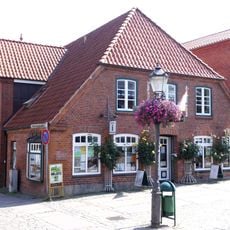
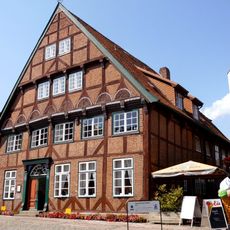
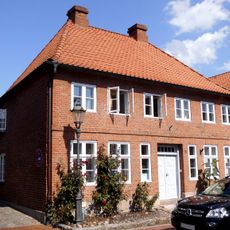
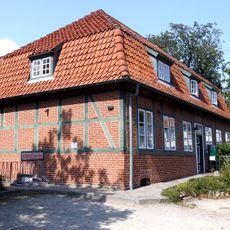
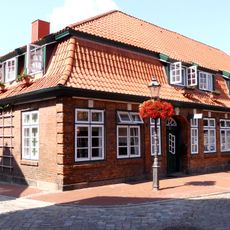
The village of Panker, part of the estate, keeps its 19th-century layout with former workers' houses, a widows' foundation, the carriage house and the former stables. The inn Ole Liese is named after the favourite horse of Prince Friedrich Wilhelm of Hessenstein in the early 19th century; its restaurant 1797 holds a Michelin star.
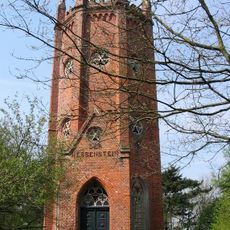
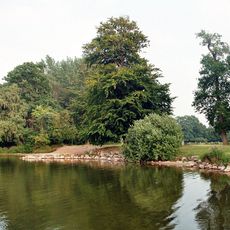
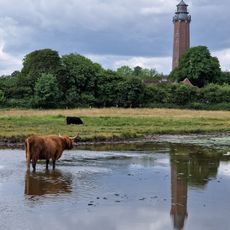
The manor house itself is private and not open to the public; visitors explore the surrounding estate village instead. The baroque garden was redesigned as an English landscape garden in the 19th century, with waterways, bridges, ponds and tree groups. The village, largely unchanged since the 19th century, holds restaurants, galleries and craft workshops.
The manor house stood in for Brandenburg's Rheinsberg Palace in a 1967 film adaptation of Kurt Tucholsky's novella "Rheinsberg", starring Cornelia Froboess and Christian Wolff. The house had served as housing for refugees from Germany's eastern territories until renovation began around 1964.
The community of curious travelers
AroundUs brings together thousands of curated places, local tips, and hidden gems, enriched daily by 93,416 contributors worldwide.