St. Rochus Cemetery, Cemetery in Gostenhof quarter, Nuremberg, Germany
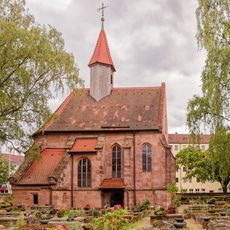
St. Rochus is a cemetery in the Gostenhof district featuring a chapel built between 1520 and 1521 by architect Hans Beheim the Elder. The grounds contain grave sections from various periods and remain fully accessible for walking.
In 1518 Emperor Maximilian I ordered burials outside Nuremberg's walls during plague times, and the cemetery was consecrated on 21 March 1519. The Rochus Chapel, endowed by Konrad Imhoff, was built in 1520–21 to plans by Hans Beheim the Elder. Until the Westfriedhof opened in 1880, this and St. Johannis were Nuremberg's main burial grounds.
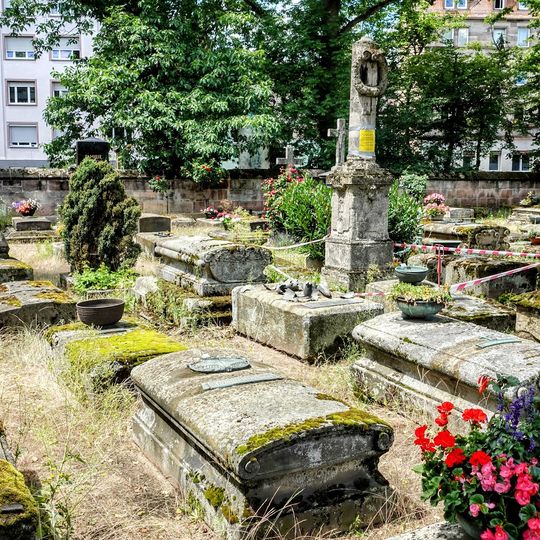
The cemetery's bronze epitaphs record ordinary craftsmen as well as patricians: from the start there were no separate plots for wealthy families, and artisans had themselves shown with their tools or products. The craft of making these plaques was added to Bavaria's register of intangible cultural heritage in 2018. The chapel's eleven windows keep almost all of their original stained glass from the Hirsvogel workshop.
The cemetery lies outside Nuremberg's old city wall in Gostenhof and is still an active burial ground, so some paths and grave plots may be closed during funerals. The site is entered through gates and is not described as step-free; visitors should expect uneven ground among the historic sandstone and bronze monuments. The Rochus Chapel, built 1520–21, is a separate structure within the grounds.
The chapel's eleven windows keep almost all of their original stained glass, made by Nuremberg's Hirsvogel workshop in the 16th century. In October 2014 metal thieves tore 41 bronze epitaphs from the graves and sold the copper for 67 euros; restoring the damage was estimated at over 350,000 euros, and 22 of the stolen pieces have since been recovered.
The community of curious travelers
AroundUs brings together thousands of curated places, local tips, and hidden gems, enriched daily by 93,015 contributors worldwide.