Havelberg Cathedral, Lutheran cathedral in Havelberg, Germany.
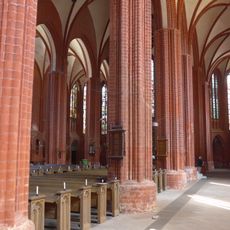
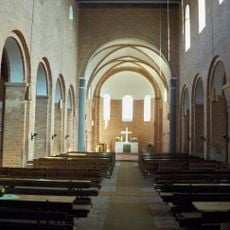
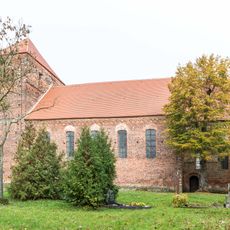
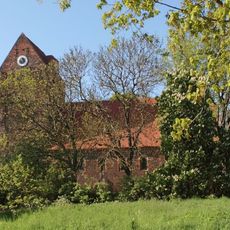
Havelberg Cathedral is a Romanesque Lutheran cathedral on a hill at the edge of the old town in Havelberg, Saxony-Anhalt. It has three naves whose lower walls date from the original construction, while the vaulting above was added later in the Gothic style.
King Otto I founded the Bishopric of Havelberg in 946, and construction of the cathedral began in 1147. It was consecrated in 1170, during a period when German settlers and clergy were establishing a presence east of the Elbe.
The grisaille windows in the nave date from around 1300, painted in grey tones rather than bright colours. The oak choir stalls and three sandstone candlesticks are from the same period. The 20 reliefs and 14 sandstone sculptures on the rood screen, made in the early 15th century, are attributed to a sculptor of the Parler school and show scenes from the life of Jesus.
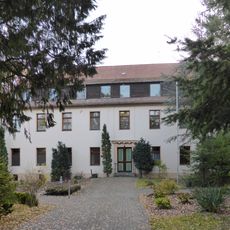
The cathedral stands on the Bischofsberg above the Havel, reached on foot from the old town by a short climb. The Prignitz Museum opened in 1904 not in the cathedral but in the former monastery building, so church and museum are separate stops. The cathedral is a station on the Straße der Romanik, and since 1996 it has been owned by the Domstiftung of Saxony-Anhalt.
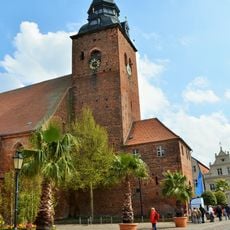
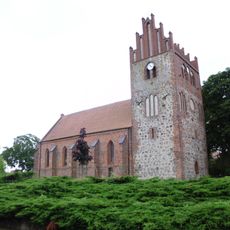
The westwork's crenellated crown at about 22 metres led 19th-century observers to call it a defensive structure, and they read its lighting slits as arrow slits. In 1997 the castle researcher Reinhard Schmitt showed that it had a ground-level portal and three wide passages to the nave from the start.
The community of curious travelers
AroundUs brings together thousands of curated places, local tips, and hidden gems, enriched daily by 94,042 contributors worldwide.