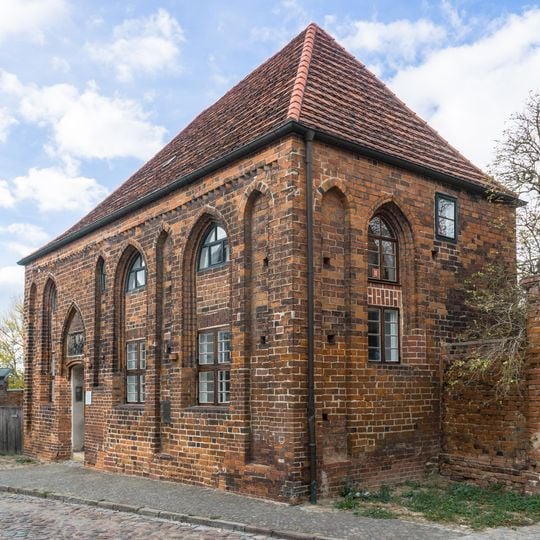
Beguinenhaus, Medieval chapel in Havelberg, Germany
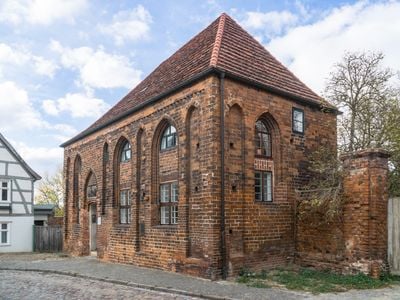
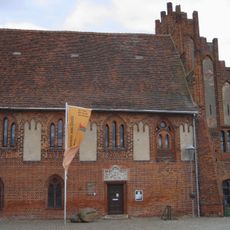
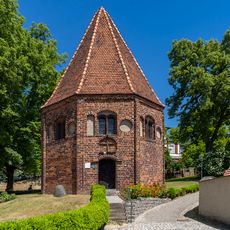
Beguinenhaus is a rectangular brick building in Havelberg with a steep red-tiled hipped roof. Its long side has tall pointed-arch recesses containing green-framed windows and a small arched doorway, and a sandstone relief above the entrance shows the Mocking and Crucifixion of Christ.
In 1397 (or 1390), Thidericus Kremer and his wife Elysabeth donated the altar of St. Spiritus and St. Andreas for the newly built hospital chapel, the only surviving record of its founding. The hospital sheltered the sick and probably the poor and travellers. By the 16th century or later the chapel was profaned and converted into a two-storey dwelling; in 1841 four widows lived in six upstairs rooms. The last residents left in 1952.
The name Beguinenhaus recalls the Beguines, lay women who lived in community without taking formal vows. The sources do not confirm that Beguines ran the hospital, but a later tradition links the building to the residents of the Altes Dom-Beguinenhaus. From 1841 four widows of the town lived in small rooms upstairs, while two rooms served as guest rooms.
The building stands on the southern edge of Havelberg's city island, on the cobbled street that in the Middle Ages ran just outside the Sandauer Gate and the town wall. It is a private building, so the brick facade, pointed-arch recesses and the sandstone relief above the entrance are seen from the street.
Above the entrance portal is a sandstone relief from the building's construction period showing the Mocking and Crucifixion of Christ. It is the only medieval carving still in place; nothing of the interior furnishings survives.
The community of curious travelers
AroundUs brings together thousands of curated places, local tips, and hidden gems, enriched daily by 92,743 contributors worldwide.