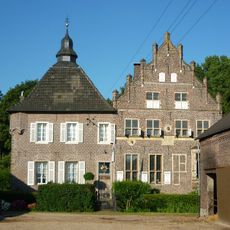
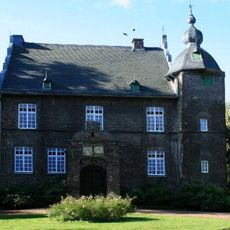
Haus Donk, Former moated castle in Vorst, Tönisvorst, Germany
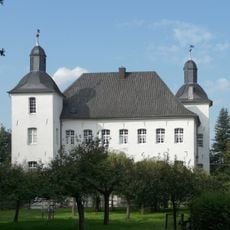
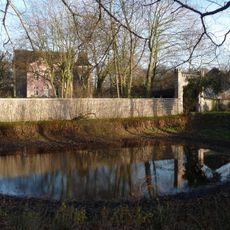
Haus Donk is a water castle in Tönisvorst surrounded by a moat that forms an integral part of its defensive and residential design. The building sits within this water system, which shapes how the structure is organized and accessed.
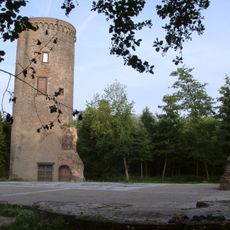
Haus Donk was first recorded in 1259 as a fief of the Electorate of Cologne, and its right half-timbered tower was built around 900 by the Franks on an artificial motte. A Renaissance tower followed around 1550, and the castle served as a border fortification of the Kempen office against the duchies of Jülich and Guelders. Destroyed in the 19th century, it was rebuilt in the 1970s and restored from the early 1990s by architect Georg Rütten for owner Rod Hützen.
The name Donk refers to a raised, buildable spot in marshy ground, describing the site itself. From 2004 to 2007 the house was the residence of US goalkeeper Kasey Keller, then playing for Borussia Mönchengladbach. Later the Tönisvorst registry office used the Rittersaal for civil weddings, and the estate could be booked for celebrations.
Haus Donk is privately owned and was sold again after renovations that began in February 2020, so it is not a regularly open monument; visits depend on the owner's arrangements. The moat of the former Vorburg farm is still visible, and the grounds lie in the Vorst district of Tönisvorst, in the Viersen district.
The right-hand half-timbered tower was built around 900 AD by the Franks on an artificially raised mound, a motte, as a defensive structure; everyday life took place in the outer bailey, a farmyard whose moat is still visible today. The present manor house is only about a third of the original building.
The community of curious travelers
AroundUs brings together thousands of curated places, local tips, and hidden gems, enriched daily by 94,041 contributors worldwide.