Stapelhaus, Medieval trade building in Altstadt-Nord, Germany
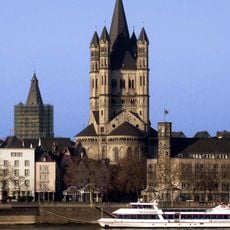
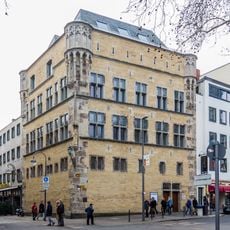
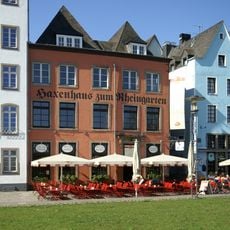
The Stapelhaus is a historic trade building in the Altstadt-Nord district of Cologne, sitting on the Rhine riverbank close to the church of Groß St. Martin. Its stepped gabled facade and decorated stair tower give the building a recognizable silhouette along the waterfront.
The building was first constructed in the Middle Ages as a fish market, then rebuilt between 1558 and 1561 with added defensive features. It was renovated again in the early 20th century, when it received the stepped gable and stair tower visible today.
The name Stapelhaus comes from the Cologne staple right, in force from 1259, which required passing merchants to offer their goods for sale in the city. The building's earlier function is little documented, but it served the sea-fish trade: herring, stockfish and other fish were washed, cut, salted and packed here, then marked with Cologne's three crowns. Waste pipes ran straight into the Rhine.
The building stands directly in front of the choir of Groß St. Martin in the Altstadt-Nord, a short walk from the Rhine promenade. The stair tower and the south-side remains are the parts that survived the 1942 and 1944/45 firebombing; the rest is a 1960s reconstruction on the old ground plan. The fourth floor holds the Colonia Forum business club, so upper levels are not open to casual visitors.
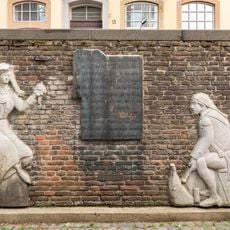
Fish was a permitted trade for women in Cologne, unlike in other cities, and the female traders called Feschwiever were guild members of the Gaffel. Their work was restricted over time: in 1397 the Fischmengersse were barred from selling larger fish that had to be weighed, and in 1482 they lost the trade in salted goods, leaving them only small fresh fish.
The community of curious travelers
AroundUs brings together thousands of curated places, local tips, and hidden gems, enriched daily by 93,440 contributors worldwide.