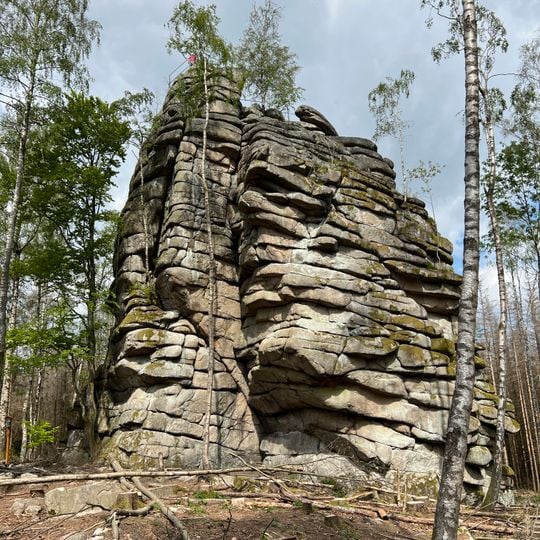
Schnarcherklippen, Rock formation in Harz District, Germany
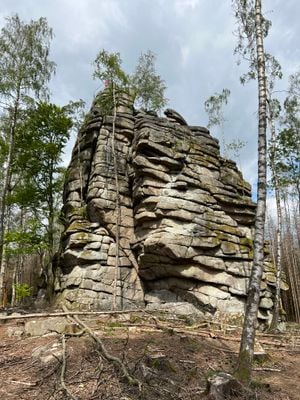
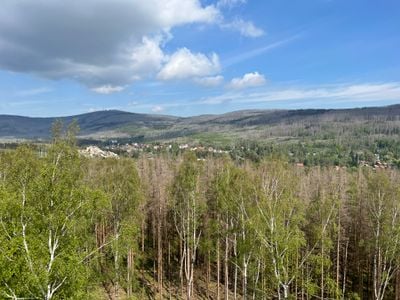
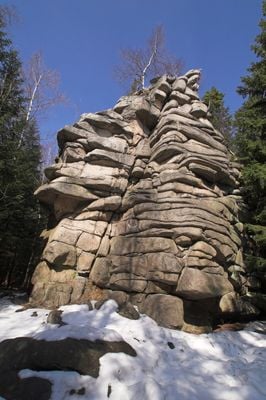
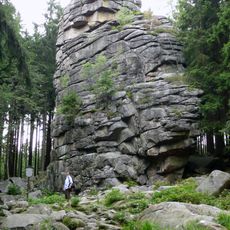
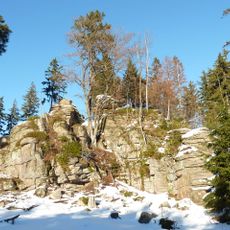
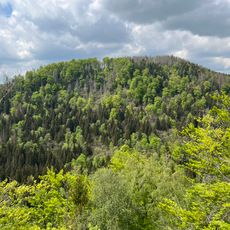
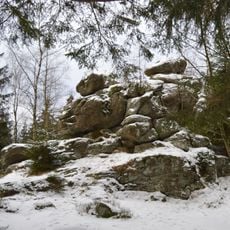
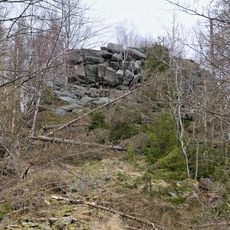
Schnarcherklippen are two freestanding granite pinnacles in Harz District, separated by a narrow gap and rising to 671 meters elevation. The northeastern tower reaches 25 meters in height, while the southwestern face stands about 20 meters away, both carved from pale granite exposed by centuries of weathering.
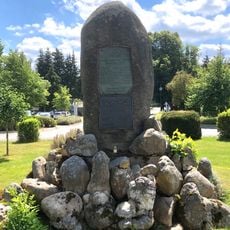
Johann Wolfgang von Goethe climbed to the rocks during his third Harz journey in September 1784 and studied their structure. He later wove his observations into scenes from Faust I and Faust II, where the Harz rock landscape appears as a literary backdrop.
Visitors who listen carefully during southeast winds can hear a snoring-like sound emerging from the gap between the two towers, which gave the rocks their name. This natural acoustic effect occurs when air currents pass through the narrow space and echo against the granite walls.
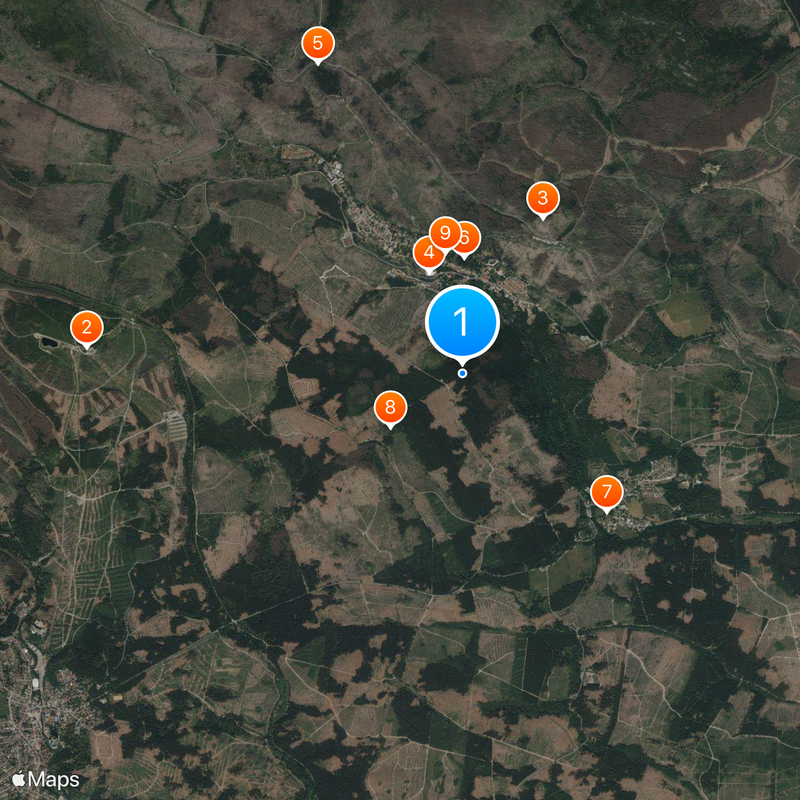
An iron ladder fixed to the northeastern pinnacle allows less experienced visitors to reach the top, while the southwestern face offers climbing routes ranging from beginner to advanced grades. Access paths lead from the edge of Schierke through forest trails, and sturdy footwear helps on the rocky ground.
The granite contains magnetite deposits that interfere with compass readings, causing the needle to deflect from magnetic north when hikers stand near the base. This magnetic anomaly has led to navigation errors over the years, especially for those relying solely on a compass in the forest.
The community of curious travelers
AroundUs brings together thousands of curated places, local tips, and hidden gems, enriched daily by 91,145 contributors worldwide.