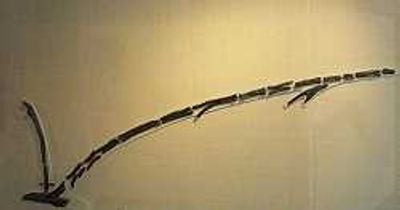
Walle Plough, Bronze Age plough in Walle, Lower Saxony, Germany.
The Walle Plough is a Bronze Age tool made from a 3-meter oak beam with an attached 60-centimeter ploughshare, discovered buried deep in a peat layer. It stands as one of the oldest preserved farming implements found in this region.
Peat cutters discovered this farming implement in 1927 while working in a bog. The artifact dates from the transitional period between the Bronze and Iron Ages, when people in this region were developing more sophisticated agricultural techniques.
The tool reveals how people of that period tended their fields and what materials they used. It offers a direct glimpse into the daily farming practices of an early society.
The original is displayed at a museum in Hanover, while a replica is shown at the museum in Aurich. Visitors should check which location is closer to them and verify opening times before planning a visit.
Researchers found evidence that this tool was intentionally submerged in bog water, possibly to protect it from damage or as a ritual offering. Such a practice was unusual and suggests beliefs that extended beyond practical farming concerns.
The community of curious travelers
AroundUs brings together thousands of curated places, local tips, and hidden gems, enriched daily by 91,282 contributors worldwide.