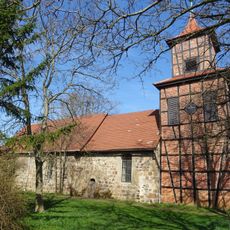
Hofgestüt Bleesern, Historic stud farm in Seegrehna, Germany.
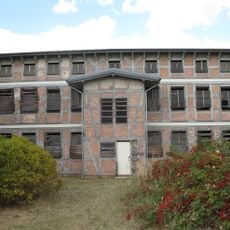
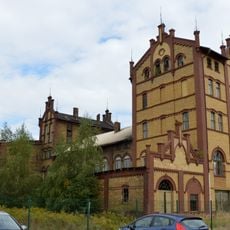
Hofgestüt Bleesern is a former electoral Saxon court stud farm in Seegrehna, a district of Lutherstadt Wittenberg. The surviving early Baroque four-wing complex was built from 1676 to 1686 to a design by Wolf Caspar von Klengel. Its wide loose stalls for mares, foals and young horses reflect the 'tame stud' principle, in which animals were kept indoors year-round.
Bleesern grew out of a 12th-century Burgward and was first documented as a Vorwerk in 1379; a studery existed by 1449/1450. From 1486 Frederick III, residing in Wittenberg, used it as the Saxon electoral court stud, a role it held until 1722. On 4 June 1547, after the Wittenberg Capitulation, Emperor Charles V granted Duke Moritz the reversion of the Saxon electoral dignity on the stud meadow later called Herzog Moritz' Wiese.
The farm reflects how horse breeding was central to Saxon authority and regional power, with the impressive architecture itself demonstrating the importance placed on these animals. Walking through the complex, visitors encounter spaces designed to showcase and manage valuable bloodlines.
Visits focus on the East and South wings, which are managed by a local heritage association that offers guided tours. It is best to contact the association beforehand to confirm accessibility and visiting arrangements.
The stud buildings erected between 1676 and 1686 under Elector Johann Georg II follow the principle of the "tame stud": horses stayed indoors year-round instead of grazing in summer, which required long loose stalls for mares, foals and young stock. Bleesern is the oldest surviving example of this type. The design is by Wolf Caspar von Klengel, and the surviving inventories show how the rooms were originally used.
The community of curious travelers
AroundUs brings together thousands of curated places, local tips, and hidden gems, enriched daily by 94,632 contributors worldwide.