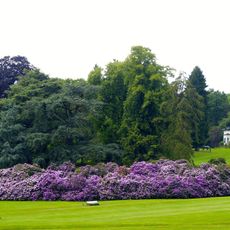
Herrenburg, Cultural heritage castle in Essen, Germany.
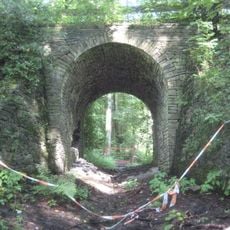
Herrenburg is a vanished Carolingian ringwork on the Pastoratsberg south of Essen-Werden, on the left bank of the Ruhr. Its oval enclosure measures about 150 by 100 metres and survives as rubble-stone masonry remnants and a series of earthen ramparts. The hill takes its name from the medieval parish house of St. Clemens, which later stood inside the walls.
The Herrenburg is a Carolingian ringwork on the Pastoratsberg south of Essen-Werden, left bank of the Ruhr. Finds from the 9th to 11th centuries point to its origin in the early Middle Ages. The hill takes its name from the medieval parish house of St. Clemens, which later stood inside the rampart. The site has since disappeared above ground.
The name Herrenburg comes from the medieval parish house of St. Clemens, which later stood inside the ringwork; the hill below is still called Pastoratsberg. Nothing of a castle stands today: only rubble-stone masonry remains and a series of earthen banks survive on the oval plateau, 150 by 100 metres, above the left bank of the Ruhr.
The site lies on the Pastoratsberg, on the left bank of the Ruhr south of Essen-Werden, with the Alteburg ringwork further south. The oval rampart, roughly 150 by 100 metres, survives as low earthworks and scattered rubble-stone masonry, so the ground is uneven and partly overgrown. Approach on foot and watch your footing along the wall lines.
The name Herrenburg does not come from a castle lord: it derives from the medieval parish house of St. Clemens, which later stood inside the ringwork. The oval rampart measures about 150 by 100 metres, and the site lies on the Pastoratsberg above the left bank of the Ruhr, south of Essen-Werden.
The community of curious travelers
AroundUs brings together thousands of curated places, local tips, and hidden gems, enriched daily by 93,664 contributors worldwide.