Kattenturm Essen, Medieval castle in Essen, Germany
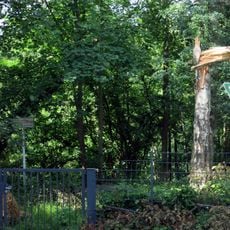
Kattenturm, the ruin of Burg Luttelnau, is a square residential tower of unplastered Ruhr sandstone rising 13 metres on a two-metre-high mound 25 metres across, with a 7.80 by 7.80 metre ground plan. Its north-eastern half has collapsed, yet the three former storeys, once 16 metres high, remain legible. The surviving base storey has walls 1.70 to 1.80 metres thick around a 4.25-metre-wide room closed by a barrel vault.
The residential tower was built in the 13th century on a long Ruhr island and only later surrounded by a moat. From 1296 the Lords of Luttelnau held it as a fief of Werden Abbey; after their line died out in 1417 it passed in 1424 to Heinrich von Oefte. Already described as desolate in 1454, it served the lords of Oefte as a prison at the end of the 16th century. Excavations in 1968 found traces of 14th- and 15th-century building work.
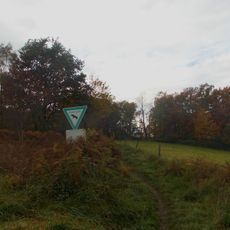
The name Lüttelnau, also written Luthenau and Luttenau, comes from Low German "lütt" for small and means "small meadow". The name Kattenturm only appeared in the 19th century; later legends linked it to cats and to the Chatti guarding a treasure there. The ruin is now a protected monument open to visitors.
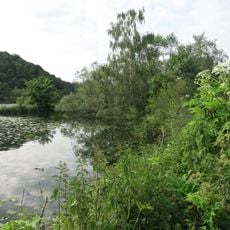
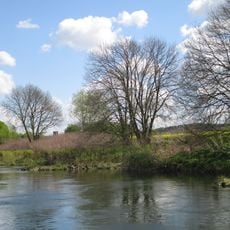
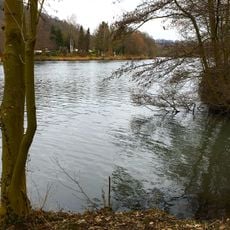
The ruin stands on the north bank of the Ruhr at Am Kattenturm 1 in Essen-Kettwig, directly opposite Schloss Oefte on the far bank. The site is open for viewing; the tower itself is unsafe to climb, so the remains are seen from the ground. The former moat survives as a three-metre-wide depression on the north side.
The name Kattenturm only appeared in the 19th century; earlier the site was called Lüttelnau, Luthenau or Luttenau, meaning "small meadow" in Low German. Legend later linked the name to cats and to the Chatti, said to have guarded a treasure there.
The community of curious travelers
AroundUs brings together thousands of curated places, local tips, and hidden gems, enriched daily by 93,665 contributors worldwide.