Hägeles- und Brunnenklinge, Protected nature reserve in Kaisersbach, Germany
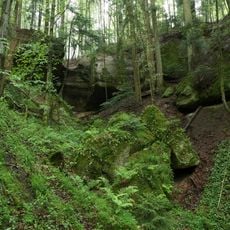
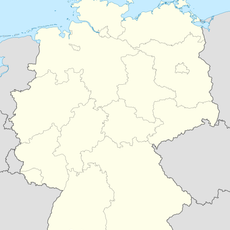
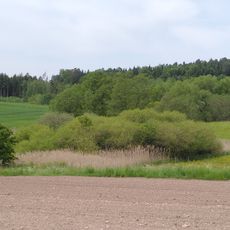
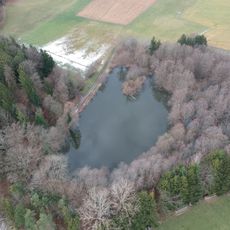
Hägeles- und Brunnenklinge is a 5.4-hectare nature reserve near the hamlet of Ebersberg, about three kilometres southeast of Kaisersbach. It protects two parallel side gorges cut into the 35–40-metre-thick Upper Stubensandstein of the Middle Keuper. The eastern Hägelesklinge ends in a narrow crevice-like grotto; the western Brunnenklinge culminates in a dome-shaped sandstone grotto large enough to hold a two-storey house, with a small pool at its base.
The Hägelesklinge is named after Johannes Hägele, born in Ebersberg on 21 March 1806, who deserted from the military and hid in the rock crevices he knew from childhood, taking food from houses in his hamlet. He died childless in 1859. The double gorge was made accessible about 150 years ago and was designated a nature reserve by decree of the Nordwürttemberg regional council on 13 November 1969.
The Hägelesklinge is named after Johannes Hägele, born in Ebersberg on 21 March 1806, a weaver turned soldier who deserted and hid in these rock crevices, taking bread, flour, bacon and eggs from the houses of his hamlet. The double gorge was made accessible about 150 years ago and counts among the most striking natural features of the Welzheimer Wald.
The reserve lies about three kilometres southeast of Kaisersbach, near the hamlet of Ebersberg. The two gorge branches run almost parallel; the Hägelesklinge is the eastern branch, the Brunnenklinge the western one. Paths lead close to rock edges, and fallen boulders lie in the stream bed, so wear sturdy shoes and avoid the gorges after heavy rain.
Water erosion and frost have carved dome-shaped caverns into the sandstone large enough to hold multi-story structures. These natural excavations show how powerful weather forces become when acting over long periods of time.
The community of curious travelers
AroundUs brings together thousands of curated places, local tips, and hidden gems, enriched daily by 94,046 contributors worldwide.