Hödinger Tobel, Nature reserve in Sipplingen and Überlingen, Germany
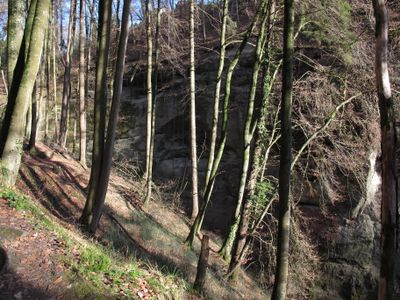
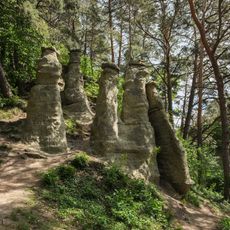
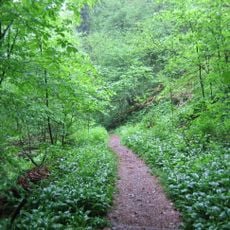
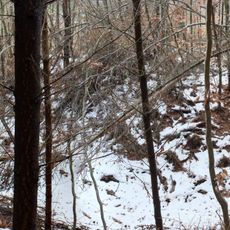
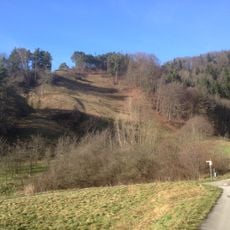
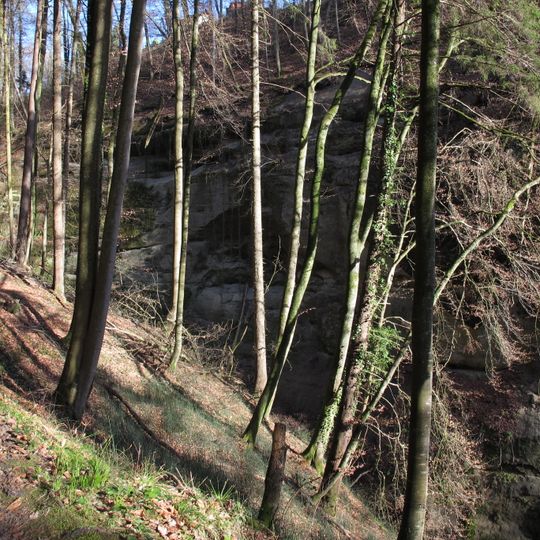
The Hödinger Tobel is a 28-hectare nature reserve west of Überlingen's Hödingen district. The Tobelbach stream drops about 170 metres over two kilometres through a steep erosion gorge in molasse rock, with landslides, spring layers and tufa formations. The reserve protects orchid-beech and broom-pine forests.
The Hödinger Tobel was designated a nature reserve by ordinance of the Baden Minister of Culture and Education on 21 October 1938, under reserve number 4.054; the Tübingen regional council is now the responsible authority. The protection covers a steep erosion gorge in the Überlingen molasse, with orchid-beech forest and broom-pine forest holding alpine plant species.
The ravine lies about 300 metres west of Überlingen's Hödingen district, and the name Tobel is the local word for such a V-shaped erosion gully. The protected area is split between Sipplingen (about 9.5 hectares) and Überlingen (about 18 hectares). Visitors can look for the perennial honesty, Lunaria rediviva, among the orchid-beech woodland.
The reserve lies about 300 metres west of Überlingen's Hödingen district, at around 530 metres above sea level; the Tobelbach drops roughly 170 metres over two kilometres toward Lake Constance. Paths cross a steep erosion gorge with landslide slopes, spring layers and calcareous tufa, so sturdy footwear is needed. About 18 hectares are on Überlingen land and nine and a half on Sipplingen land.
The reserve shelters the perennial honesty (Lunaria rediviva) alongside blue fescue, bloody cranesbill, liverleaf, red helleborine and martagon lily. Alpine plant species grow here on the molasse slopes, an unusual occurrence for the Lake Constance basin.
The community of curious travelers
AroundUs brings together thousands of curated places, local tips, and hidden gems, enriched daily by 94,451 contributors worldwide.