Heidenhöhlen, Artificial rock-cut chambers in Goldbach, Überlingen, Germany
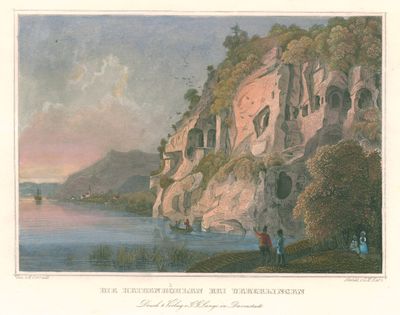
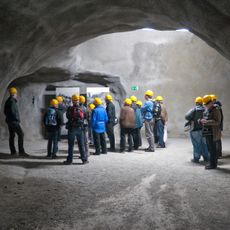
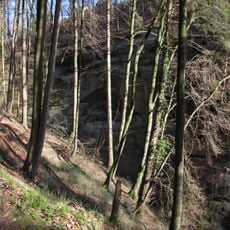
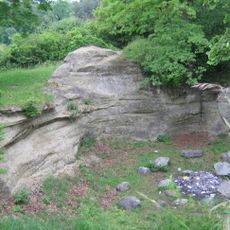
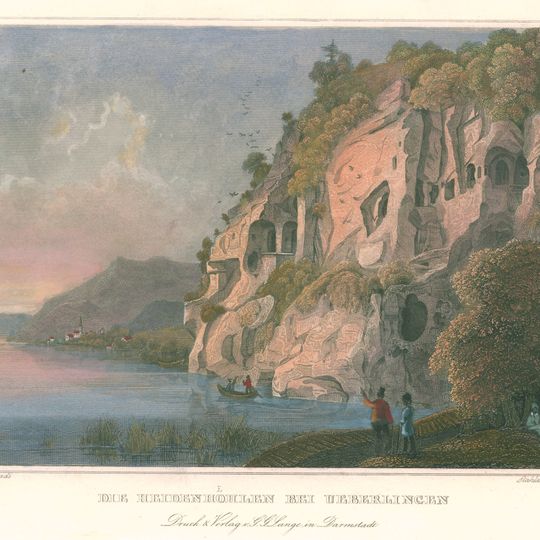
The Heidenhöhlen are artificial passages and chambers cut into the molasse sandstone of the Heidenlöcherfelsen, a nearly vertical rock face west of Goldbach, a district of Überlingen. The rooms had window openings facing the lake and were linked by doors and connecting passages, some with false vaults carved from the rock. Only one room remains visible today, and it is not accessible.
The Heidenhöhlen are artificial passages and chambers cut into the molasse sandstone of the Heidenlöcherfelsen near Goldbach, showing medieval architectural features; their exact origin is unknown. In the 18th century poor and homeless people lived in them temporarily, and the town of Überlingen had parts destroyed to drive them out. In 1846 blasting for the lakeside road (later the B 31) cut a gap through the rock, and since 1954 the access has been closed; a storm in 1960 caused the eastern part to collapse, after which more sections were blown up.
The name Heidenhöhlen, formerly Heidenlöcher, links the rock-cut rooms to popular tales of pagan dwellers, though their medieval architectural features suggest a different origin. In the 19th century the empty, primeval-looking "rock dwellings" became an attraction for early Lake Constance tourists.
The caves lie in the Heidenlöcherfelsen west of Goldbach, a district of Überlingen, not Stockach. Access has been closed since 1954 because of cracks in the soft molasse sandstone, and the eastern part collapsed in a storm in 1960. Only one room is still visible from below, above the busy B 31, behind dense thorn bushes.
The caves were not damaged by the railway built in the 1890s, although this is often claimed. The eastern part collapsed in a storm in 1960, and further sections were later blown up to protect the nearby road.
The community of curious travelers
AroundUs brings together thousands of curated places, local tips, and hidden gems, enriched daily by 94,393 contributors worldwide.