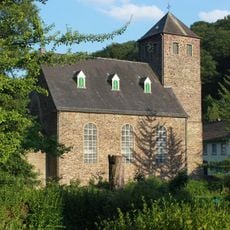
Napoleonsbrücke, Stone footbridge in Müngsten, Germany
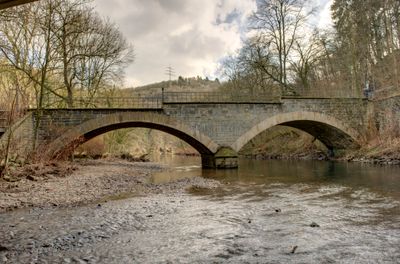
The Napoleonsbrücke is a 6.28-metre-wide stone arch bridge over the Wupper at the mouth of the Morsbach, between Solingen and Remscheid. Its three piers stand two on land and one in the water. The end walls are built level rather than parallel to the rising roadway, so two steps even out the level along the bridge, while the side footpaths have twelve stair steps in total. The railing is a wrought-iron lattice.
Construction began in 1846 following the destruction of a wooden predecessor from 1819 by flooding in 1840. The new stone bridge was built to connect the growing industrial cities and remained the primary river crossing for over a century.
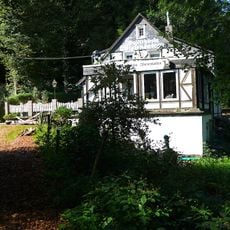
The name Napoleonsbrücke is not contemporary; it only became common in recent decades, and its origin is unexplained. Since 15 June 1998 the bridge has been listed as a monument under number 594 in Solingen's official register. Nearby stood the Halbach family's former home, which housed the popular excursion restaurant Haus Müngsten until the 1960s.
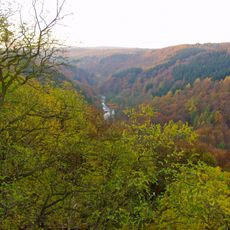
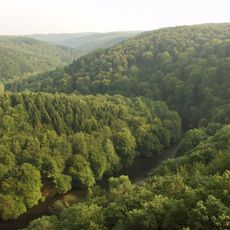
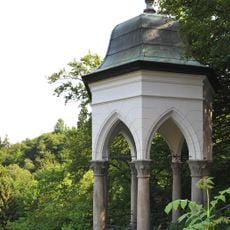
Since 1963 the bridge has carried only pedestrians, mostly hikers crossing the Wupper; through traffic uses the concrete road bridge built beside it. It was fully restored in two phases in 2006 and 2007 for the opening of the Müngstener Brückenpark. From the deck you look along the Wuppertal valley to the Müngstener Diederichstempel.
The parapet walls are laid horizontally rather than following the rising roadway, so two steps in the deck and twelve stair steps along the side footpaths even out the level. The wrought-iron lattice railing runs between them. From the bridge you look along the Wupper valley to the Diederichstempel in Müngsten.
The community of curious travelers
AroundUs brings together thousands of curated places, local tips, and hidden gems, enriched daily by 93,854 contributors worldwide.