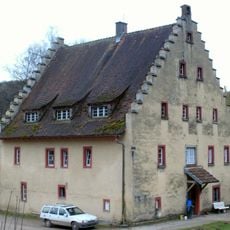
Inzlingen Castle, Medieval moated castle in Inzlingen, Germany.
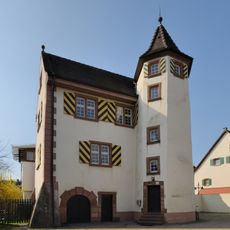
Inzlingen Castle is a medieval moated fortress with a rectangular base and water-filled moat situated near the Swiss border in Baden-Württemberg. The masonry rises directly from the surrounding water, creating an enclosed defensive structure that has endured for centuries.
The castle was first documented in 1511 as the property of Dr. Peter Wölfflin, and a 1470 mention of a "castle or water house" in a Reich von Reichenstein endowment now suggests an earlier origin, with a first building possibly around 1400. The family held Inzlingen after Margrave Rudolf III granted Heinrich Reich von Reichenstein high justice over the village in 1394. A first major conversion followed in 1563–1566, and between 1674 and 1745 the buildings took their Baroque form.
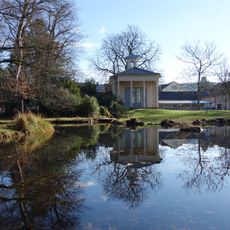
The Rittersaal's stucco ceiling has the four castles of the Reich von Reichenstein — Inzlingen, Reichenstein, Landskron and Brombach — depicted in its corners. The 1750 rococo work also includes knee-high panelling, panelled doors, supraportes, a tiled stove and inlaid floors. In the park stands a 1731 statue of Saint Nepomuk by Johann Ladner.
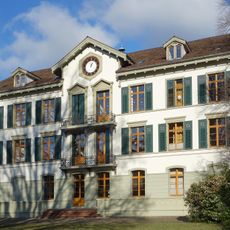
The castle has housed Inzlingen's town hall since 1978, so the inner courtyard and entrance area are reached via a wooden footbridge over the moat from the car park. A circular path runs completely around the moat, and a restaurant occupies part of the building.
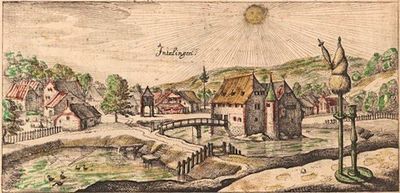
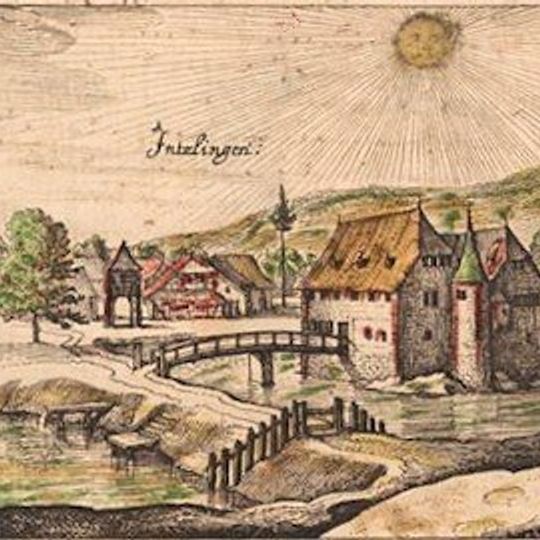
The 1980 stamp reproduced a copper engraving of the castle published by Daniel Meisner in 1625, probably cut by Eberhard Kieser. The same image appeared on issues of both the Deutsche Bundespost and the Deutsche Bundespost Berlin, Michel numbers 1038 and 615.
The community of curious travelers
AroundUs brings together thousands of curated places, local tips, and hidden gems, enriched daily by 94,353 contributors worldwide.