Isenburg, Medieval castle ruin in Wildbach, Germany.
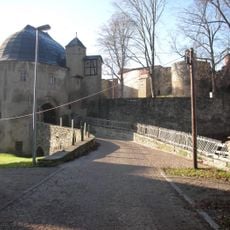
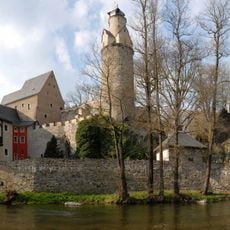
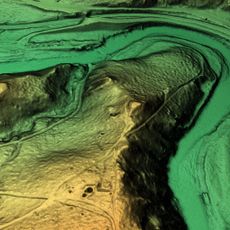
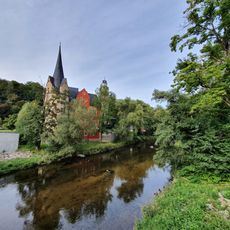
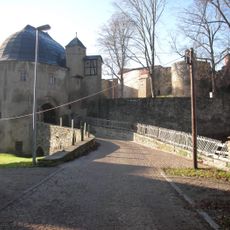
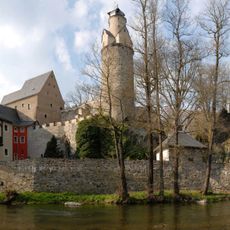
Isenburg is a castle ruin near Aue-Bad Schlema situated on a rocky outcrop above the confluence of Wildbach stream and Zwickauer Mulde river. The site displays remaining stone walls and a round tower structure.
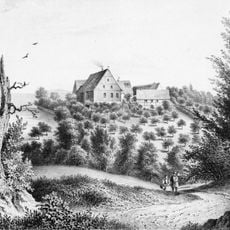
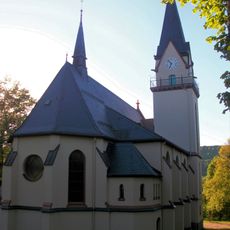
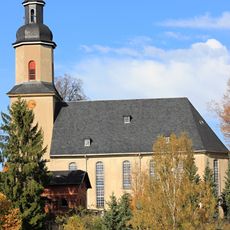
Archaeological finds show the fortification on the rocky spur above the Wildbach-Mulde confluence existed by the 12th century. No medieval charter mentions it; the first written account dates to 1738, when tradition called it a robber castle or Eisenburg. It was destroyed by the 14th century and never rebuilt. From the 15th to 17th centuries the ruins likely sheltered local people in wartime, and around 1750 the remains were blown up to build Wildbach's stone church.
Local lore calls the ruin a robber castle, the Old Castle or the Iron Castle; the first written account dates only to 1738, and no medieval charter names it. The name Isenburg probably refers to nearby iron mining, or to an "iron" stronghold. Legends tell of an old woman and a white woman seen among the stones.
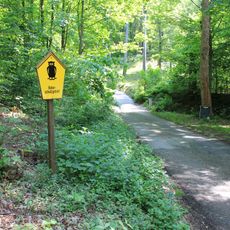
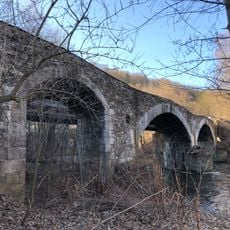
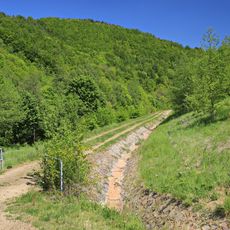
From Hartenstein railway station the ruins are about a 30-minute walk: cross the Zwickauer Mulde near Stein Castle, then follow the Poppenwald upstream. After the short steep climb called Sanfter Heinrich the path forks; the right branch passes Wildbach Church and reaches the ruins after roughly 700 metres, while the left branch is the narrow Raubrittersteig along the river bank.
The wall core is filled with stones set in opus spicatum, a herringbone pattern, between horizontal layers of rubble stone. The round bergfried measures about 9 metres across at its base, with walls 3 metres thick. The whole site covers 51 by 33 metres.
The community of curious travelers
AroundUs brings together thousands of curated places, local tips, and hidden gems, enriched daily by 93,873 contributors worldwide.