Spatenberg, Mountain summit in Thuringia, Germany
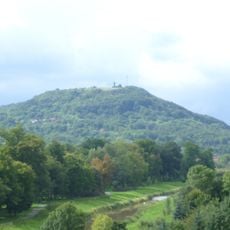
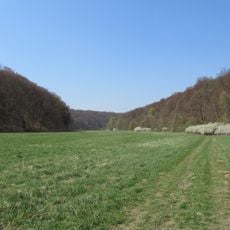
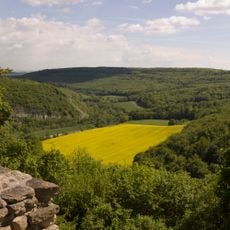
Spatenberg is a mountain in Thuringia that rises to about 366 meters and shapes the landscape in the northern part of the region. Its position makes it an important landmark that people can see from nearby areas.
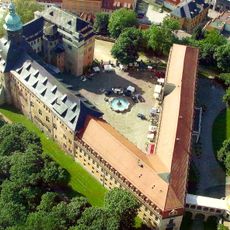
Around 1070 Henry IV built castles in the Harz region; the Spatenburg on this hill followed in 1073. That year Saxon and Thuringian rebels besieged it without success, but the peace of Gerstungen (1074) forced Henry to agree to its demolition. Rebuilt, destroyed again during his excommunication, rebuilt in the 12th century, it passed in 1263 for 50 marks of silver to Count Henry II of Hohnstein and was finally destroyed in 1295. Two ramparts remain on the west side.
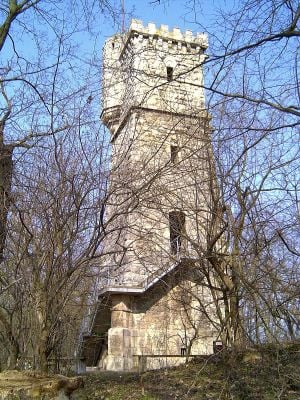
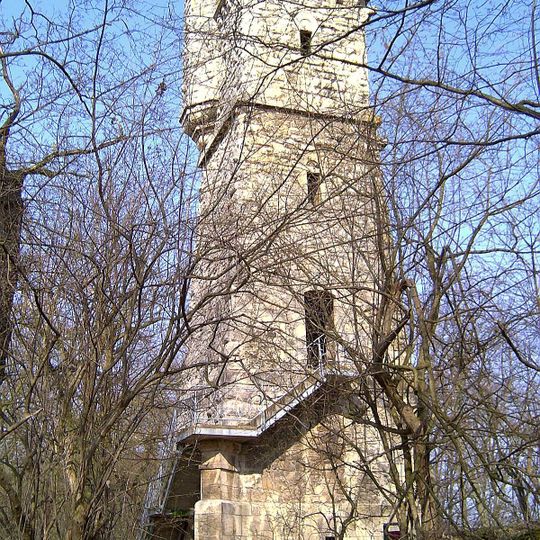
The name Spatenberg is a later form; the hill was long called Olenburg or Ohlenburg, and the 1895 newspaper appeal still used "Olenburg". The tower's name changed too: because Bismarck was viewed negatively in East Germany, local heritage enthusiasts introduced "Spatenbergturm" in the 1970s so the tower could still be named at all.
Several marked trails lead up the mountain with different difficulty levels and starting points near parking areas. Wear sturdy shoes and check the weather before you go, as conditions on higher ground can change quickly.
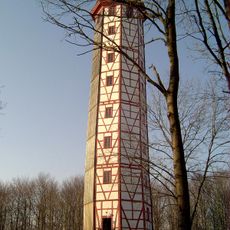
The tower on the summit is not the original: the 19.5-metre Spatenbergturm was inaugurated on 10 November 1895 as a Bismarck tower, funded largely by a Sondershausen doctor and built in seven months from limestone quarried on the nearby Totenberg. In the 1970s GDR officials objected to the name Bismarck, so local heritage enthusiasts introduced "Spatenbergturm".
The community of curious travelers
AroundUs brings together thousands of curated places, local tips, and hidden gems, enriched daily by 94,644 contributors worldwide.