Vater Rhein und seine Töchter, Bronze fountain at Ständehaus, Düsseldorf, Germany
Vater Rhein und seine Töchter is a neo-baroque bronze fountain unveiled on 7 March 1897, set on an exedra projecting into the Kaiserteich in front of the Ständehaus in Düsseldorf-Unterbilk. Father Rhine sits on a rock, surrounded by four female figures personifying tributaries, two of them also painting and industry, plus playing putti. The granite basin holds water-spouting fish and shells; the rear shows farming, winegrowing and fishing.
The monument was unveiled on March 7, 1897, after it was originally created as a plaster sculpture for Emperor Wilhelm I and Empress Augusta in 1884. Its transformation from an imperial gift to a public fountain shows the city's cultural shift in the late 1800s.
The four female figures around Father Rhine personify tributaries of the Rhine, and two of them also stand for painting and industry, alluding to the Düsseldorf school of painting and the growing industries of the Rhine and Ruhr. On the back are reliefs of agriculture, winegrowing and fishing.
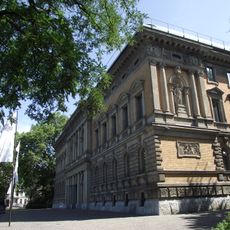
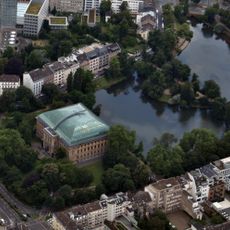
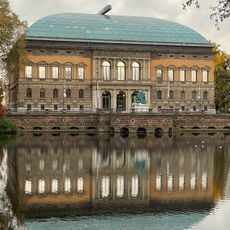
The fountain sits on an exedra projecting into the Kaiserteich, in front of the former Ständehaus, now part of the Kunstsammlung Nordrhein-Westfalen (K21). It faces the Hofgarten park near Düsseldorf-Unterbilk. The rear reliefs of farming, winegrowing and fishing are best seen from the water side, so walk around the basin to view them.
The dragon at Father Rhine's feet guards the Nibelung treasure, shown as an imperial crown and an imperial sword, not a scepter. On the monument's back, reliefs depict agriculture, winegrowing and fishing, and the pedestal carries water-spouting fish and shells above a light granite basin.
The community of curious travelers
AroundUs brings together thousands of curated places, local tips, and hidden gems, enriched daily by 94,477 contributors worldwide.