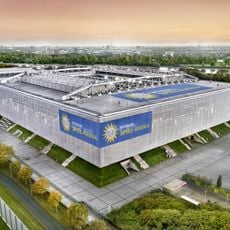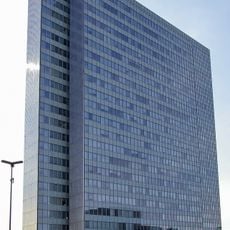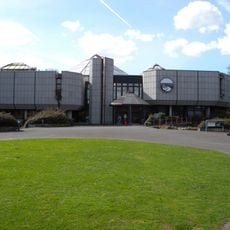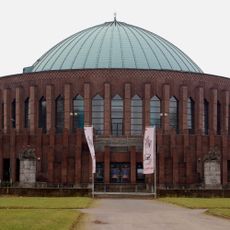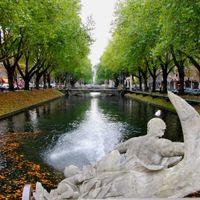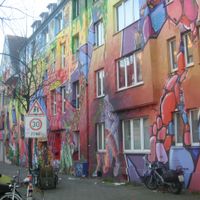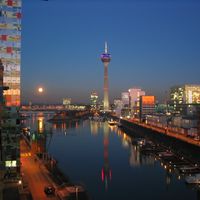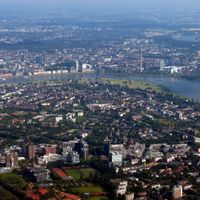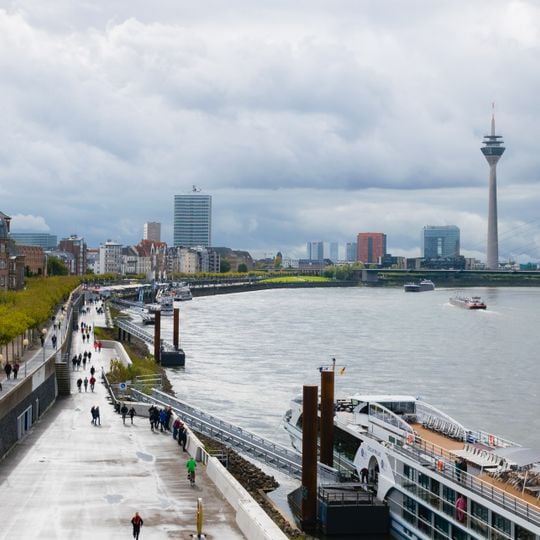
Düsseldorf, State capital on the Rhine River, Germany
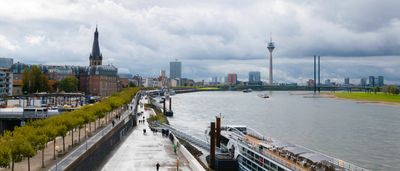
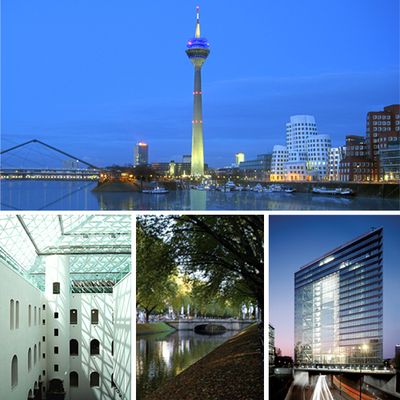
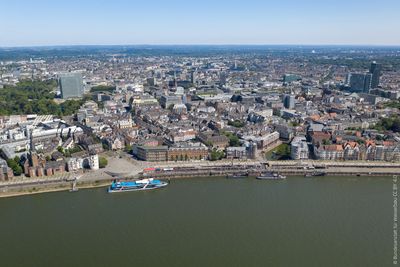
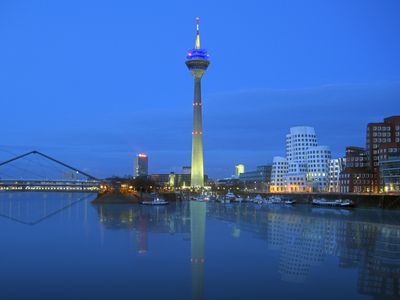
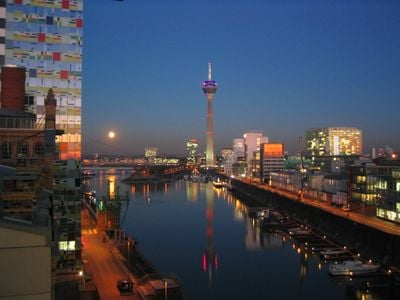
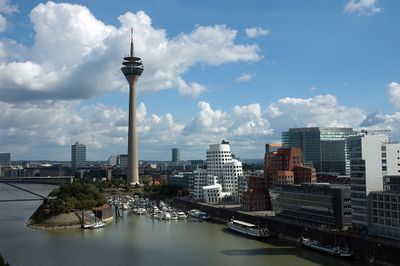
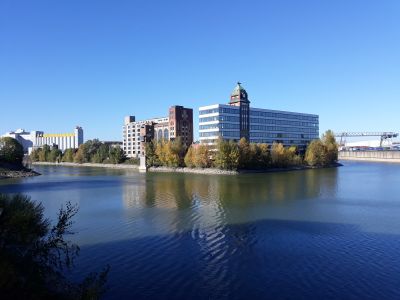
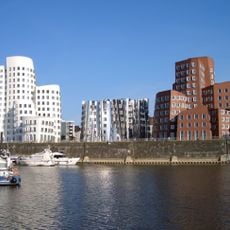
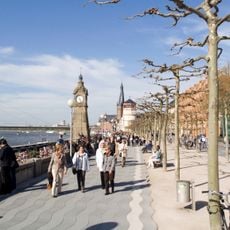
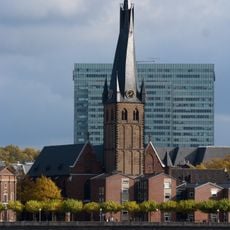
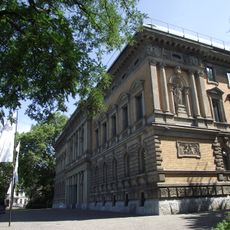
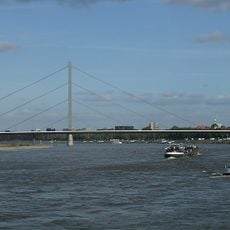
The city sits along the eastern bank of the river and consists of a historic core with winding lanes, alongside modern office districts and residential areas that spread into the surrounding neighborhoods. The waterway itself divides the territory into two parts, with most public buildings, shops and restaurants located on the right side, while the left bank features parks and smaller settlements.
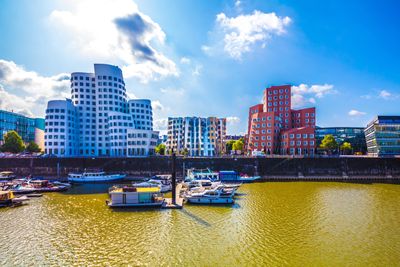
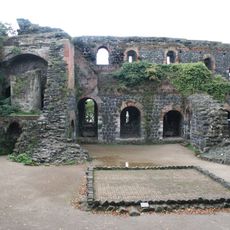
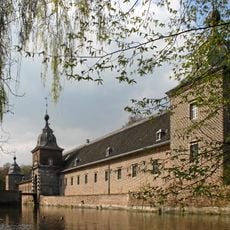
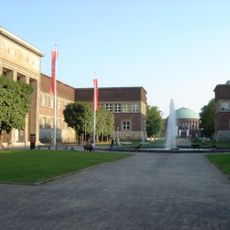
In the late 13th century, the settlement gained urban status and became the seat of the counts and later dukes of Berg, who ruled here until the 18th century. After wartime destruction, the center was rebuilt from the 1950s onward with new residential and commercial structures, creating the mixed townscape visible today.
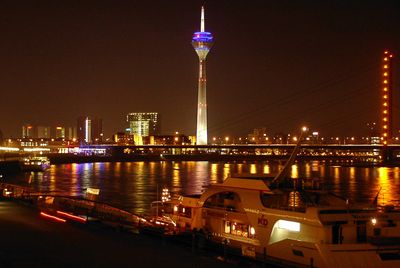
In the narrow streets of the old town, locals gather at traditional breweries to drink freshly tapped Altbier served in small glasses that are refilled continuously until a coaster is placed on top. On summer evenings, families and friends meet along the riverside promenade to picnic, stroll, or simply watch cargo ships pass by on the water.
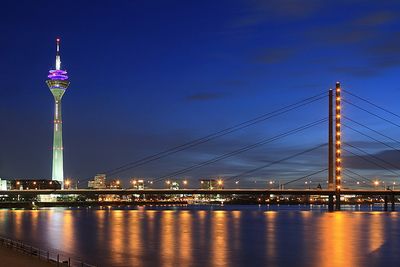
The old town core is compact and easy to explore on foot, while the outer districts are reached by tram and metro lines that run throughout the day. A continuous paved pathway runs along the riverside, suitable for pedestrians and cyclists, linking several bridges together.
Beneath the surface, an extensive network of tunnels connects shopping passages and stations, allowing travelers to move between districts in bad weather without stepping outside. Some of these underground corridors contain art installations and small shops that are often overlooked but form a hidden layer of urban life on their own.
The community of curious travelers
AroundUs brings together thousands of curated places, local tips, and hidden gems, enriched daily by 91,273 contributors worldwide.